
Marshall County Bankruptcy Records Search
Marshall County bankruptcy records are filed with the U.S. Bankruptcy Court for the Middle District of Tennessee in Nashville. All cases from Lewisburg and the rest of Marshall County go through that court. This page explains where to search those records, what they contain, and what Lewisburg-area residents need to know about the filing process, fees, and access tools.
Marshall County Bankruptcy Quick Facts
Middle District Court and Nashville Courthouse
All Marshall County bankruptcy cases are filed with the U.S. Bankruptcy Court for the Middle District of Tennessee. The Nashville courthouse is at 701 Broadway, Room 170, Nashville, TN 37203. The clerk's phone number is (615) 736-5584. The court website at tnmb.uscourts.gov has local rules, forms, fee schedules, and other resources for both filers and those looking up records.
Lewisburg is the county seat of Marshall County and sits about 50 miles south of Nashville. Marshall County has grown in recent years due to its proximity to the Nashville metro area, and that growth has brought a corresponding mix of individual and business bankruptcy filings. All of these cases go to the Middle District in Nashville, where the clerk's office maintains the records.
Creditor meetings for Marshall County cases are held in Nashville. The 341 meeting is required in every case. It is a short session with the trustee where the debtor answers questions about their finances under oath. Creditors can attend but do not have to. Most meetings in routine individual cases last less than 15 minutes. If you need to visit the Nashville courthouse to access records or request certified copies, call ahead to confirm current hours.
Marshall County Government and Court Records
The Marshall County government website lists contacts for county offices in Lewisburg, including the circuit court clerk who handles state-level civil and criminal filings for this county.

State court records in Marshall County are separate from federal bankruptcy filings. Checking both can help you build a full picture of a person's legal and financial history. Judgment liens and civil suits from state court often appear on a debtor's creditor schedule in a federal bankruptcy case.
The Middle District Bankruptcy Court website is the primary online resource for Marshall County federal case records, including links to PACER and the court's local rules.
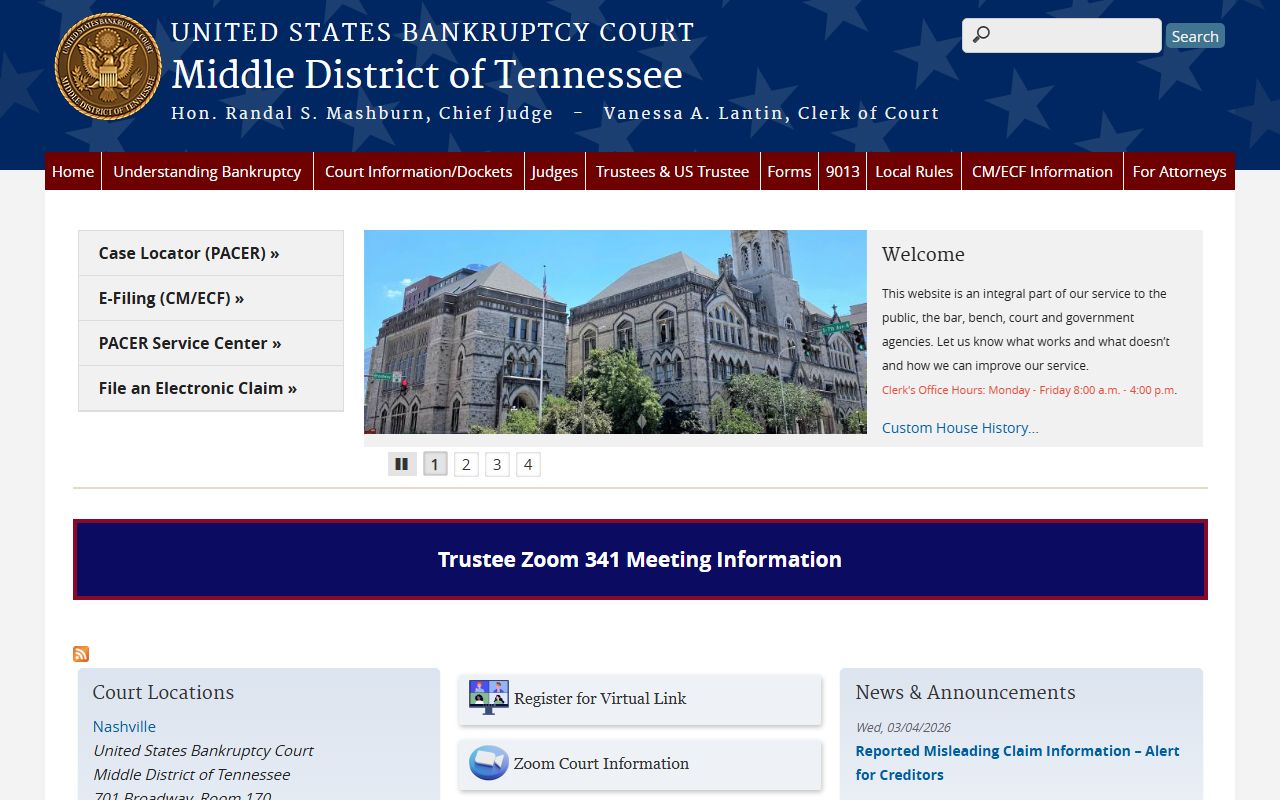
This site covers all Middle District filings including those from Marshall County and lists current trustee information and court calendars.
PACER and VCIS for Marshall County Case Searches
PACER is the federal system for online access to court records. To find Marshall County bankruptcy cases, go to pacer.uscourts.gov, create a free account, and then select the Middle District of Tennessee. You can search by debtor name, case number, or the last four digits of a Social Security number. Each match shows the case type, chapter, filing date, judge, and a full list of docket events.
Each page viewed in PACER costs 10 cents, with a $3 cap per document. Quarterly charges below $30 are waived. For most one-time searches, the cost is minimal. Attorneys or researchers doing regular searches may still stay under the free threshold for routine lookups. Documents filed electronically are typically available in the system within a day or two after the court receives them.
Use the PACER Case Locator at pcl.uscourts.gov if you need to search all federal courts at once, which is helpful when you are not certain which state or district a person filed in. Enter the name and choose Tennessee to see all matching cases and which courts hold them.
The free VCIS phone line is at 866-222-8029. Press extension 816 for the Middle District. It operates around the clock. You can get case status, filing date, chapter type, and hearing information at no cost by providing a case number or debtor name. This is often the fastest way to confirm basic facts about a case without logging into PACER.
What Marshall County Bankruptcy Records Include
A Marshall County bankruptcy file opens with the petition. The petition states who is filing, their address, and which chapter they are using. Attached are financial schedules covering all property owned, all debts by type, claimed exemptions, monthly income, and monthly expenses. A statement of financial affairs covers income history, recent transfers, and prior lawsuits.
Chapter 7 files include a trustee report on whether any non-exempt property is available for creditors. If no assets are found, the trustee files a no-asset report and the court moves toward a discharge order. Chapter 13 files include a repayment plan, any amendments to that plan, and the confirmation order issued by the judge approving the plan. Payment records for the life of the plan are also part of the file.
Under 11 U.S.C. Section 107, most of these records are public. Full Social Security numbers are not shown in public filings. Account numbers are cut to the last four digits. Judges can seal specific documents when there is a legitimate reason, but sealed entries still appear on the docket. For archived cases that predate the electronic system, contact the National Archives at archives.gov/research/court-records.
Filing Fees and Chapter Options
Marshall County residents can file under Chapter 7, 13, or 11. Chapter 7 is the most common choice for individuals. It costs $338 and discharges most unsecured debts after the trustee reviews available assets. Chapter 13 costs $313 and sets up a repayment plan over three to five years. It is often used by people who want to keep property like a house or car that might otherwise be lost. Chapter 11 costs $1,717 and is mainly used by businesses or individuals with more complex financial situations.
Installment payments are allowed if the full fee cannot be paid at filing. The court permits up to four payments. For Chapter 7 cases only, filers with income below 150 percent of the federal poverty line can apply for a full fee waiver using Form 103B. The form must be submitted at the same time as the petition. The court reviews and rules on it separately.
Filing creates an automatic stay that stops most collection actions immediately. Creditors must stop calling. Wage garnishments pause. Foreclosure actions halt. This protection applies from the moment the case is filed. Creditors who need relief from the stay must file a motion and wait for a court ruling. Domestic support obligations like child support are not affected by the stay and must continue to be paid.
A credit counseling course must be completed within 180 days before filing. A debtor education course must be completed before discharge. Both courses must use providers approved by the U.S. Trustee Program. Completion certificates must be filed with the court as part of the case record.
Nearby Counties
Marshall County sits in south-central Tennessee and borders several other Middle District counties with similar bankruptcy filing processes.