
Search Tennessee Bankruptcy Records
Tennessee bankruptcy records are public federal court documents filed with one of the state's three U.S. Bankruptcy Courts. All 95 counties fall under either the Eastern, Middle, or Western District, each maintaining complete case files that include the petition, creditor lists, financial schedules, and the final discharge or closing order. You can search Tennessee bankruptcy records online through PACER, look up basic case details by phone at no charge, or visit any district courthouse in person. This guide covers how to find and access bankruptcy records across Tennessee.
Tennessee Bankruptcy Records Quick Facts
Tennessee's Three Federal Bankruptcy Districts
Bankruptcy in Tennessee is governed by federal law under Title 11 of the United States Code. The state is divided into three federal districts, and each one serves a specific region. Your county determines which district handles your case and where your 341 meeting of creditors takes place.
The Eastern District of Tennessee covers East Tennessee and is the largest of the three courts. The main courthouse is the Howard H. Baker Jr. U.S. Courthouse at 800 Market Street, Suite 330, in Knoxville. Phone is (865) 545-4279. The Eastern District has four office locations: Knoxville serves the Northern Division, Chattanooga serves the Southern Division at 31 East 11th Street, Greeneville handles the Northeastern Division at 220 West Depot Street, Suite 218, and Winchester has an unstaffed courtroom at 200 South Jefferson Street for the southern counties. Chief Judge Suzanne H. Bauknight leads the court. Hours are 8:00 AM to 4:30 PM, Monday through Friday. The Northern (Knoxville) Division alone covers 14 counties: Anderson, Blount, Campbell, Claiborne, Grainger, Jefferson, Knox, Loudon, Monroe, Morgan, Roane, Scott, Sevier, and Union. Visit tneb.uscourts.gov for local rules, filing information, and judge schedules.
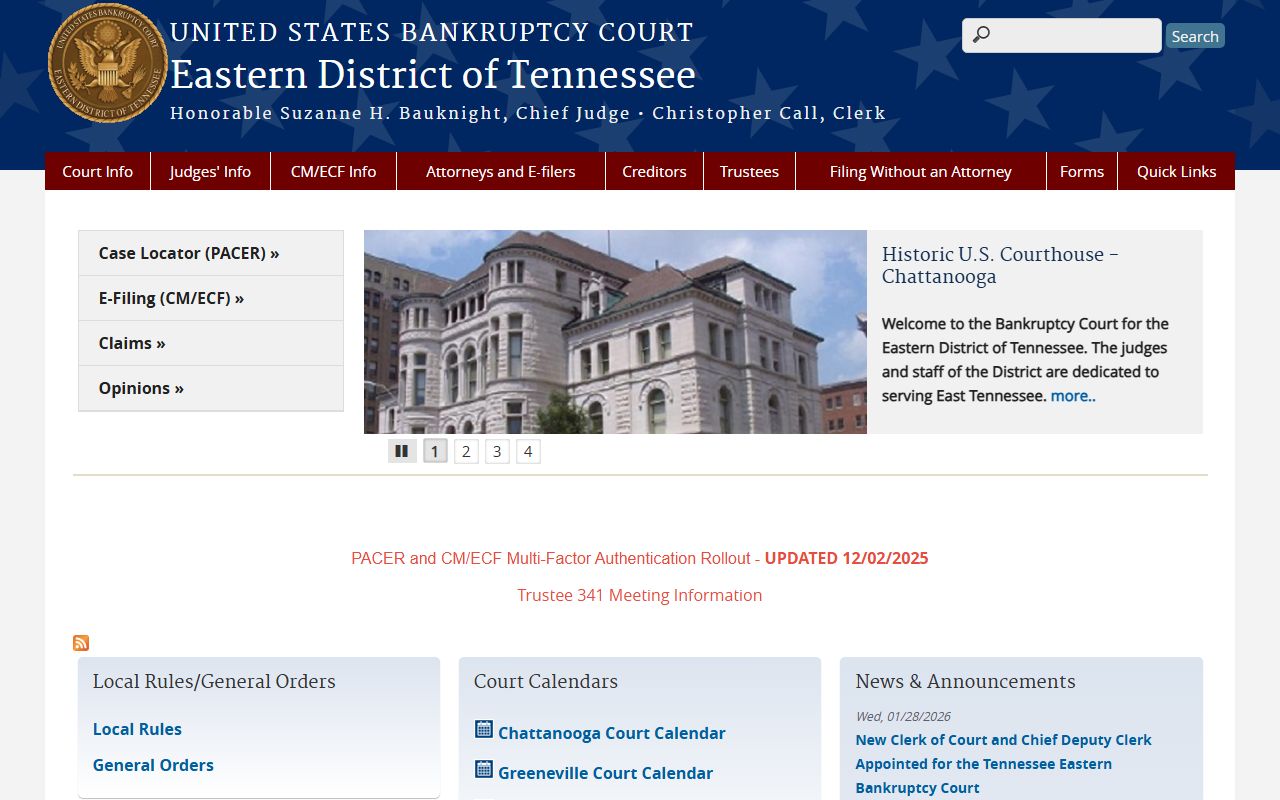
The Eastern District's Chattanooga (Southern) Division serves nine counties: Bledsoe, Bradley, Hamilton, Marion, McMinn, Meigs, Polk, Rhea, and Sequatchie. The Greeneville (Northeastern) Division covers Carter, Cocke, Greene, Hamblen, Hancock, Hawkins, Johnson, Sullivan, Unicoi, and Washington counties. In 2018, the Eastern District recorded over 520,000 docket entries, with 99 percent of activity in bankruptcy cases and the remainder in adversary proceedings.
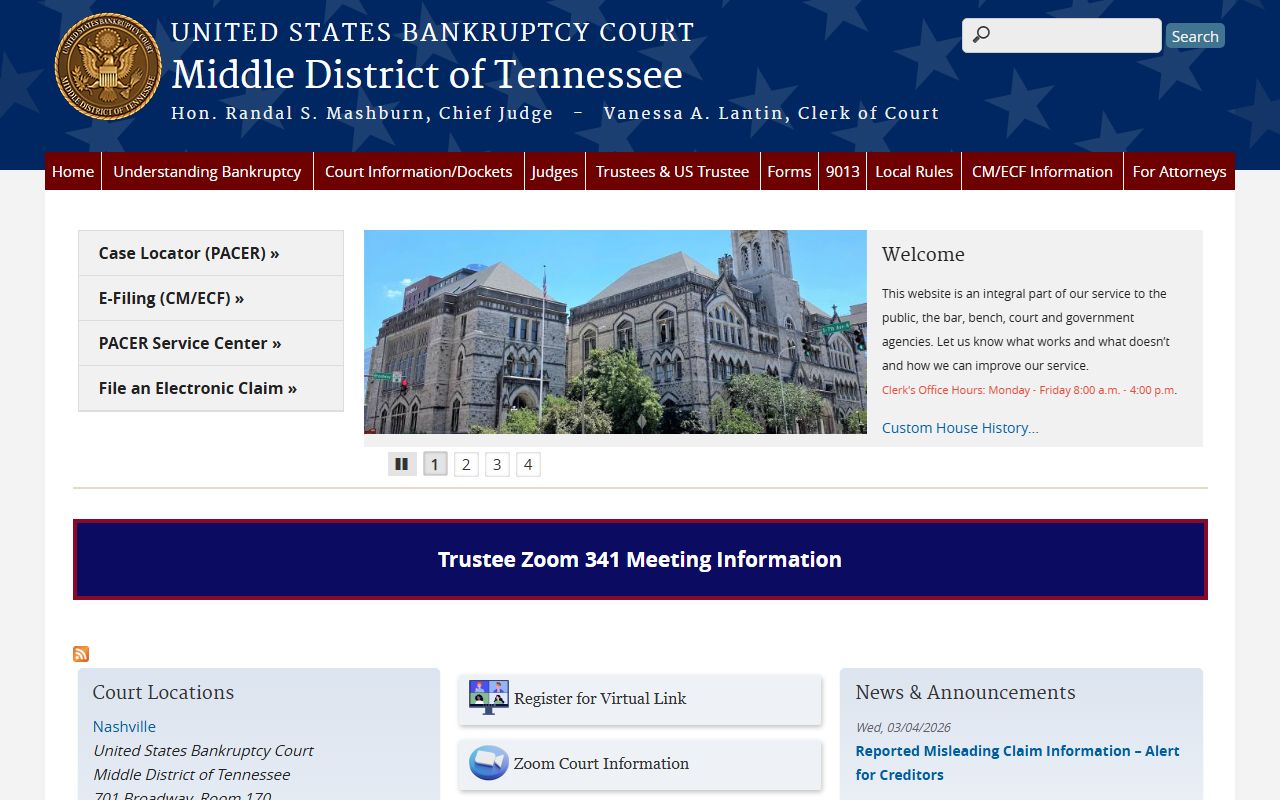
The Middle District of Tennessee is based in Nashville and covers central Tennessee, serving 32 counties. The clerk's office is at 701 Broadway, Room 170, Nashville, TN 37203. Phone is (615) 736-5584. Hours run 8:00 AM to 4:00 PM, Monday through Friday. The Middle District also maintains unstaffed courtrooms in Columbia at 815 South Garden Street and in Cookeville at 9 East Broad Street. Judges serving the court include Chief Judge George C. Paine, II, along with Judges Keith M. Lundin and Marian Harrison. Counties in the Middle District include Davidson, Montgomery, Rutherford, Williamson, Sumner, Wilson, and many others across central Tennessee. Visit tnmb.uscourts.gov for local rules and forms.
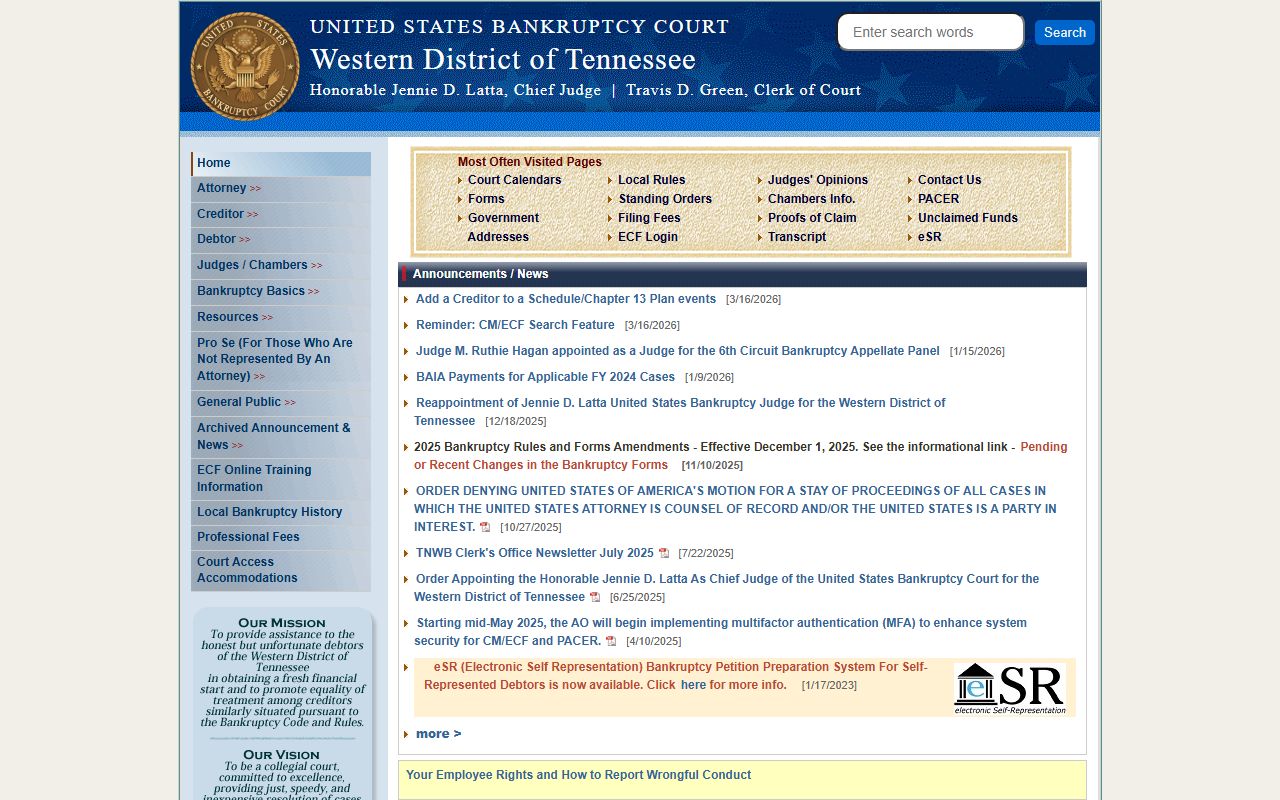
The Western District handles West Tennessee. The main courthouse is at 200 Jefferson Avenue, Suite 500, in Memphis, phone (901) 328-3500. A second office sits at 111 South Highland Avenue, Suite 107, in Jackson, phone (731) 421-9300. Chief Judge Jennie D. Latta leads the court, with Travis D. Green serving as Clerk of Court. Chapter 13 Trustees serving the Western District include Jennifer Cruseturner and Sylvia Brown for the Memphis area, and Timothy Ivy for the Jackson area. Memphis processes a large share of all Tennessee bankruptcy filings each year. Go to tnwb.uscourts.gov for judge information, local rules, and filing resources.
Note: If you are unsure which district covers your Tennessee county, check the county pages on this site or call the PACER Case Locator to identify the correct court before filing or searching.
How to Access Tennessee Bankruptcy Records
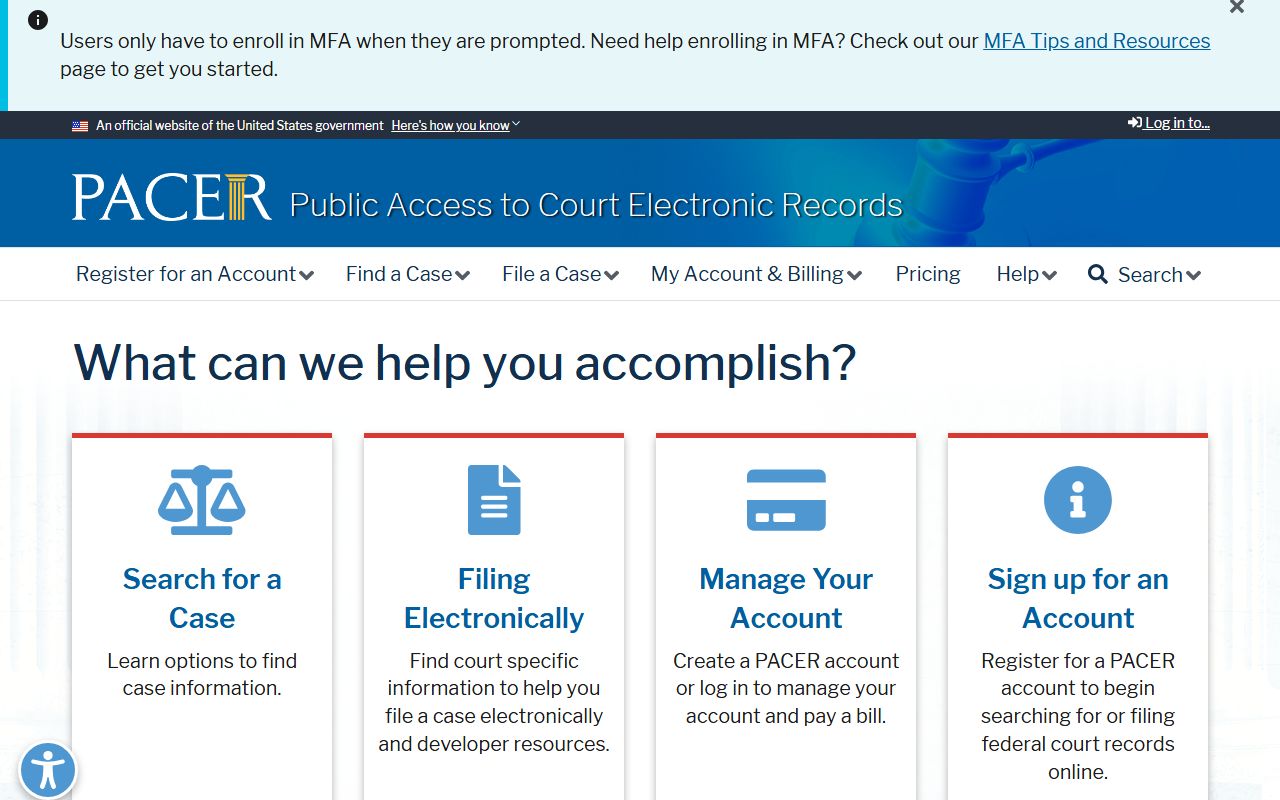
PACER is the main way to search bankruptcy records in Tennessee. The name stands for Public Access to Court Electronic Records. The system holds over one billion documents filed at all federal courts across the country, including every bankruptcy filing in Tennessee's three districts. Registration is free, and you only pay when you download documents.
To get started, go to pacer.uscourts.gov and create a free account. Once registered, you can search all three Tennessee bankruptcy districts from one login. Search by debtor name, case number, the last four digits of a Social Security number, or attorney name. Each result shows the case status, filing date, chapter type, judge, and trustee. Pull the full docket to see every document filed in the case. The cost is 10 cents per page. No single document exceeds $3.00 regardless of length. If your total quarterly bill comes to $30 or less, the fee is waived automatically. Court opinions are free through PACER as well. See the guide at uscourts.gov for step-by-step instructions on searching and downloading records from PACER.
Most Tennessee bankruptcy cases filed before 1999 exist only in paper format at the courthouse. You must visit the clerk's office in person or request copies by mail for those older files.
Using the PACER Case Locator for Tennessee Searches
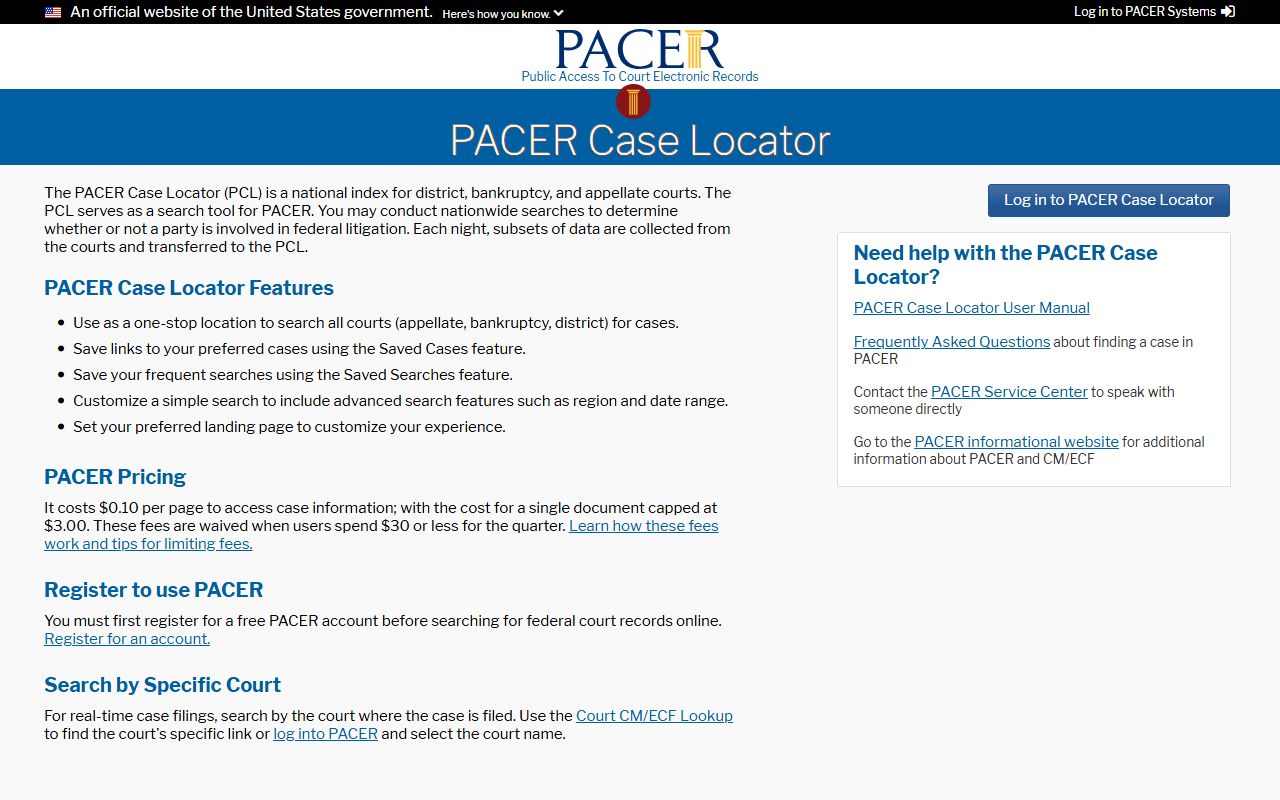
When you don't know which district a Tennessee bankruptcy case is in, use the PACER Case Locator. It functions as a national index covering all federal courts, not just Tennessee. Every night, case data from courts nationwide transfers into the system. The result is a one-stop search that checks all three Tennessee districts at the same time.
Access the Locator at pcl.uscourts.gov. Search by name, case number, Social Security number, or tax ID. Results return the court name, case number, and filing date. You can save links to cases you check often and save frequent search terms for faster repeat lookups. Filtering by region or date range helps narrow results when a name is common. A PACER account is required to search, but creating one is free.
Free Ways to Look Up Tennessee Bankruptcy Cases
Several no-cost options exist for basic Tennessee bankruptcy case lookups.
The Voice Case Information System, known as VCIS, is a free phone service available 24 hours a day, 7 days a week. Call 866-222-8029. Press extension 813 for the Eastern District, extension 814 for the Western District, or extension 816 for the Middle District. The system provides the debtor's name, attorney name and phone number, trustee name, case number, case status, chapter type, filing date, judge name, and closing dates. VCIS is the fastest free option for a quick status check on a Tennessee bankruptcy case without logging into PACER.
You can also walk into any of the three courthouse locations and use a public access terminal at no cost. These terminals give you the same PACER access available online but without any fees for viewing. Printing still costs 10 cents per page. The Nashville courthouse is at 701 Broadway. The Knoxville courthouse is at 800 Market Street. The Memphis courthouse is at 200 Jefferson Avenue, and Chattanooga has access at 31 East 11th Street. Staff at each location can help you locate a specific case and guide you through the terminal search process.
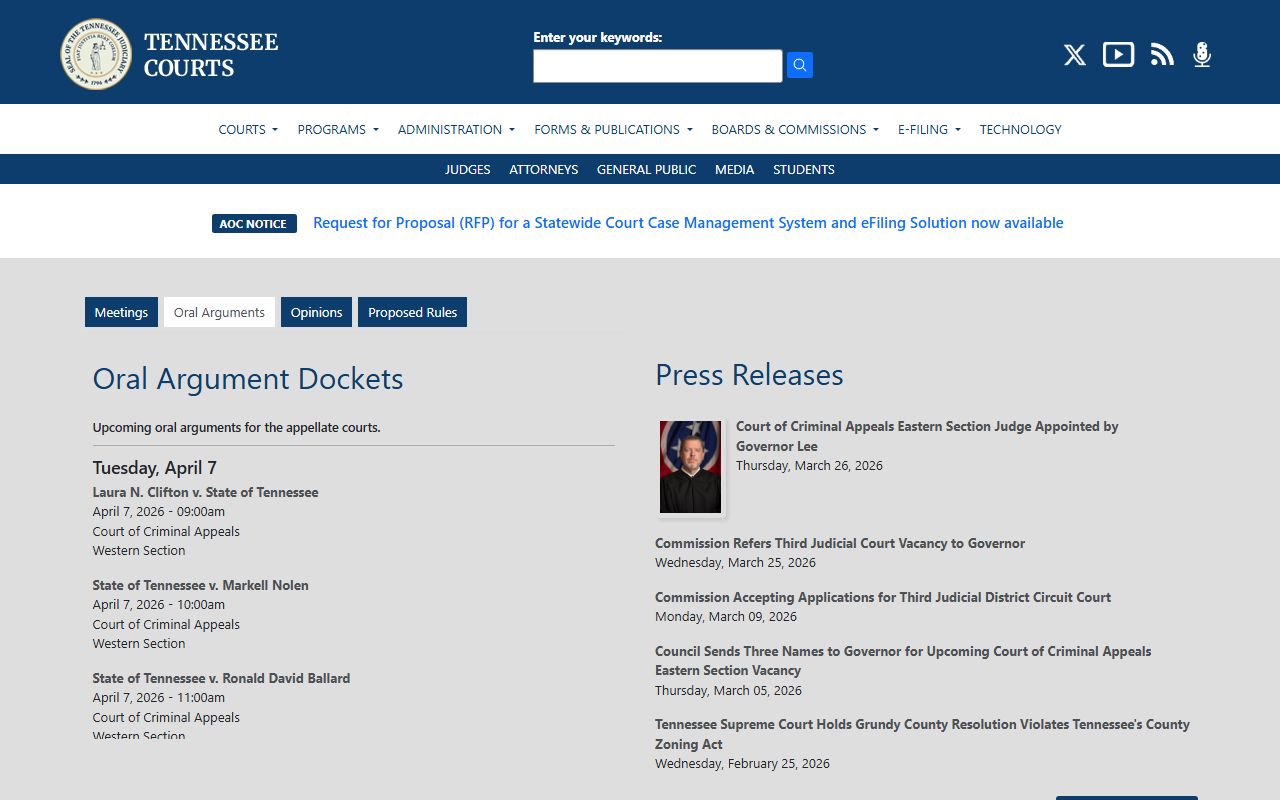
For state-level court records that run alongside bankruptcy cases, the Tennessee Court System at tncourts.gov has a case search tool for appellate-level records, court forms, and a self-help center. Records filed after August 26, 2013, are often in PDF format online.
The Tennessee Court Information System at tncrtinfo.com covers circuit, general sessions, and chancery court records for all 95 Tennessee counties. It is separate from the federal bankruptcy system but helpful when you need state civil court records alongside a bankruptcy filing.
What Tennessee Bankruptcy Records Contain
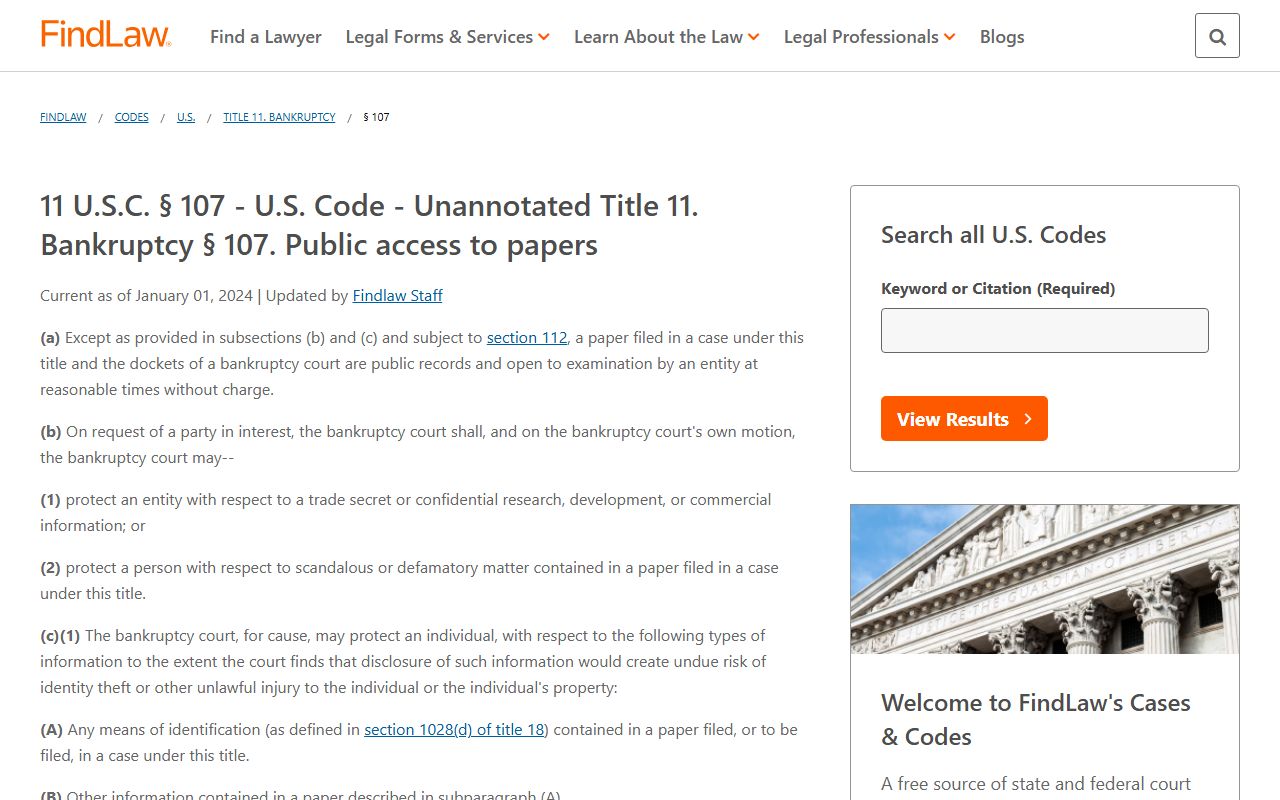
A Tennessee bankruptcy case file is a detailed public record. Under 11 U.S.C. § 107(a), all papers filed in a bankruptcy case and the court docket are public documents open for inspection at no charge at reasonable times. Any person can review them without stating a reason.
A typical Tennessee bankruptcy record includes the debtor's full name, the chapter filed under (Chapter 7, 11, 12, 13, or 15), the case number, filing date, attorney name and contact information, trustee name, and the presiding judge. The file also contains the debtor's financial schedules, which show income, monthly expenses, a full list of all creditors and their claim amounts, and a complete accounting of assets and liabilities. The type of petition filed, case disposition, and the discharge or closing date are all part of the record. These details come from the petition and supporting schedules filed at the time the case opens.
Certain personal details are kept out of the public record. Courts remove Social Security numbers, birth dates, bank account numbers, driver's license numbers, names of minor children, phone numbers, payment histories, and biometric data. This protection comes from 11 U.S.C. §§ 107 and 112. If a party has legal authority to view protected information, they can file an ex parte application with the court. Trade secrets and scandalous or defamatory material may also be protected by court order under Section 107(b). The U.S. Trustee, bankruptcy administrator, and court auditors have full access to all records for oversight purposes but may not disclose protected information to others.
Tennessee Bankruptcy Fees and Access Costs
Congress sets the filing fees for bankruptcy cases. These fees apply at all three Tennessee districts. A Chapter 7 liquidation case costs $338 to file. A Chapter 13 repayment plan costs $313. A Chapter 11 business reorganization costs $1,717. These fees go to the court clerk at filing. A debtor who cannot afford the Chapter 7 fee can apply to have it waived or paid in installments by showing income below 150 percent of the federal poverty guideline.
For accessing existing records through PACER, the charge is 10 cents per page viewed or printed. No single document costs more than $3.00, regardless of page length. Quarterly fees under $30 are waived. Public terminal use at courthouses is free but charges 10 cents per page for printouts. Certified copies cost $5 per document plus per-page copy fees. Records retrieved from the National Archives Federal Records Center run $10 for electronic retrieval, $64 to retrieve a box, and $39 for each additional box from the same request.
Note: PACER billing is quarterly, and individual researchers working on defined academic projects may request a fee exemption through the federal court system.
Historical Tennessee Bankruptcy Records
Tennessee has bankruptcy records going back to 1842. The earliest come from the Bankruptcy Act of 1841, covering filings from 1842 and 1843. The 1867 Act created records from 1867 through 1879. The 1898 Act produced case files from 1898 through 1977. All of these historical files now reside at the National Archives, which holds more than 2.2 billion textual pages of court materials in its collection nationwide.
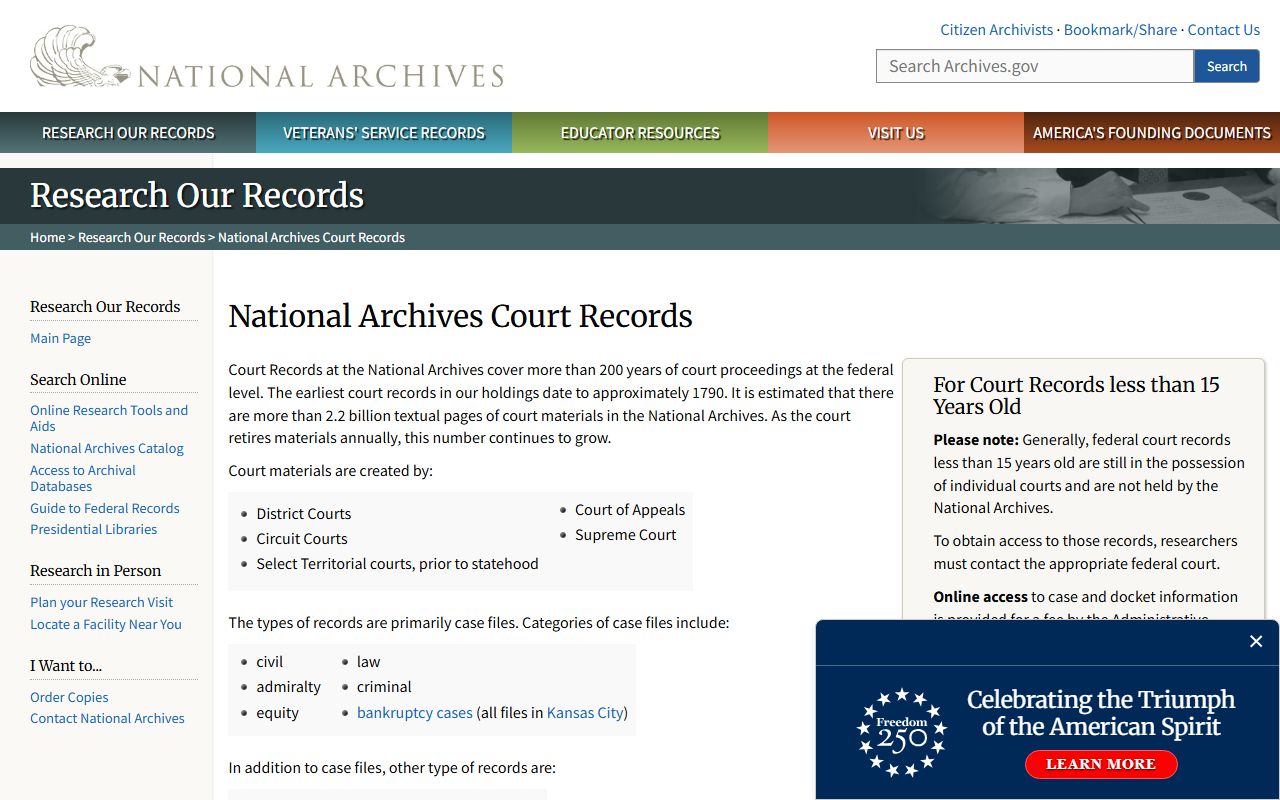
Cases less than 15 years old remain at the individual court clerks' offices. Older closed cases transfer to the National Archives Federal Records Center for permanent storage. Tennessee bankruptcy records are organized by the historical court divisions: Northern (Knoxville), Northeastern (Greeneville), Southern (Chattanooga), Eastern (Jackson), and Western (Memphis). To request copies, visit archives.gov/research/court-records and use the NARA Bankruptcy Cases Order Form. Submit requests by mail, fax, or through the NARA online service. You need the case number, accession number, location number, and box number for older files. Electronic retrieval costs $10 per case. Box retrieval from the Federal Records Center is $64 for the first box and $39 for each additional box. NARA can be reached at (215) 305-2020 or (215) 305-2001.
Electronic Filing in Tennessee's Bankruptcy Courts
All three Tennessee bankruptcy courts use the CM/ECF system for electronic case management and filing. Attorneys registered in the system file documents directly online. Members of the public can view all CM/ECF filings through PACER. Since all three districts went live on CM/ECF, records from those go-live dates forward are fully digital and searchable.
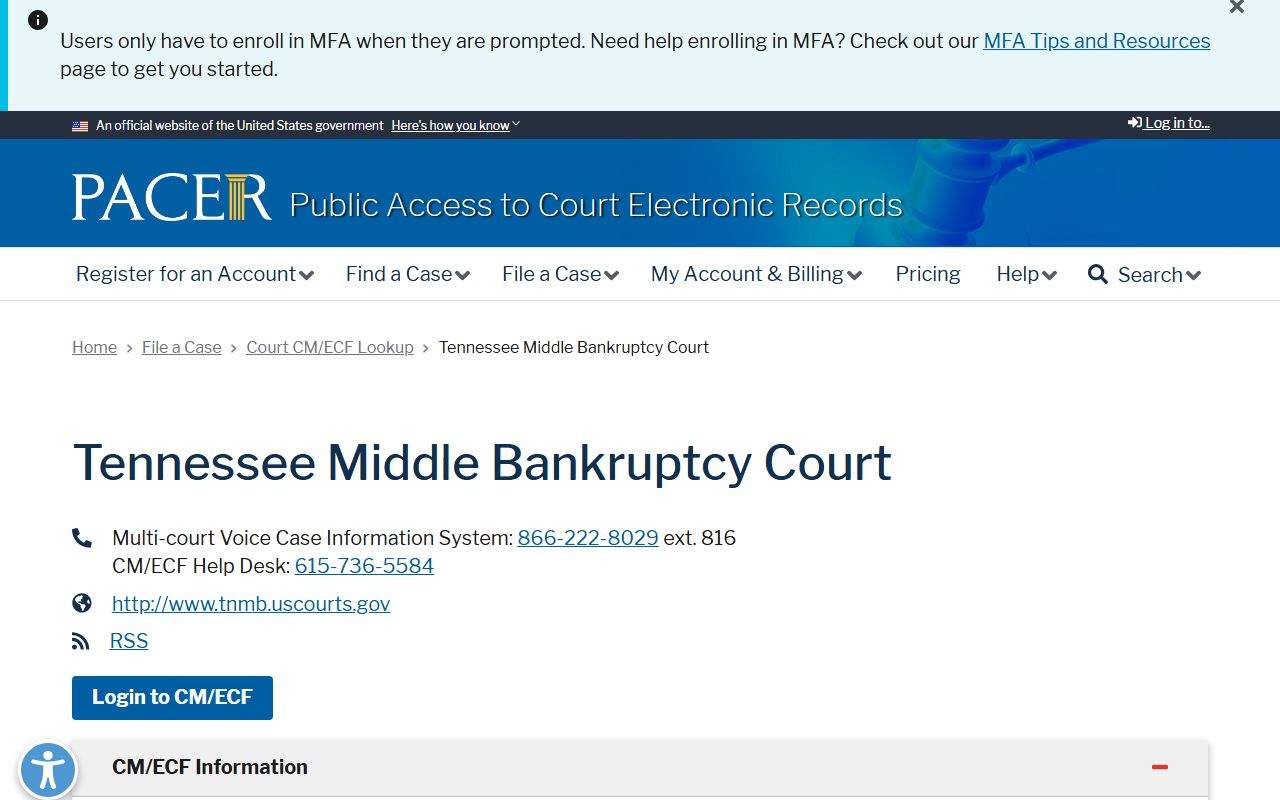
The Middle District went live on CM/ECF on October 4, 2004. Its electronic portal handles all filings for the 32 Middle Tennessee counties it serves. Access the Middle District's filing portal at the TNMBK portal on PACER. The system accepts PDF files up to 35 MB per document and up to 50 MB for merged documents.
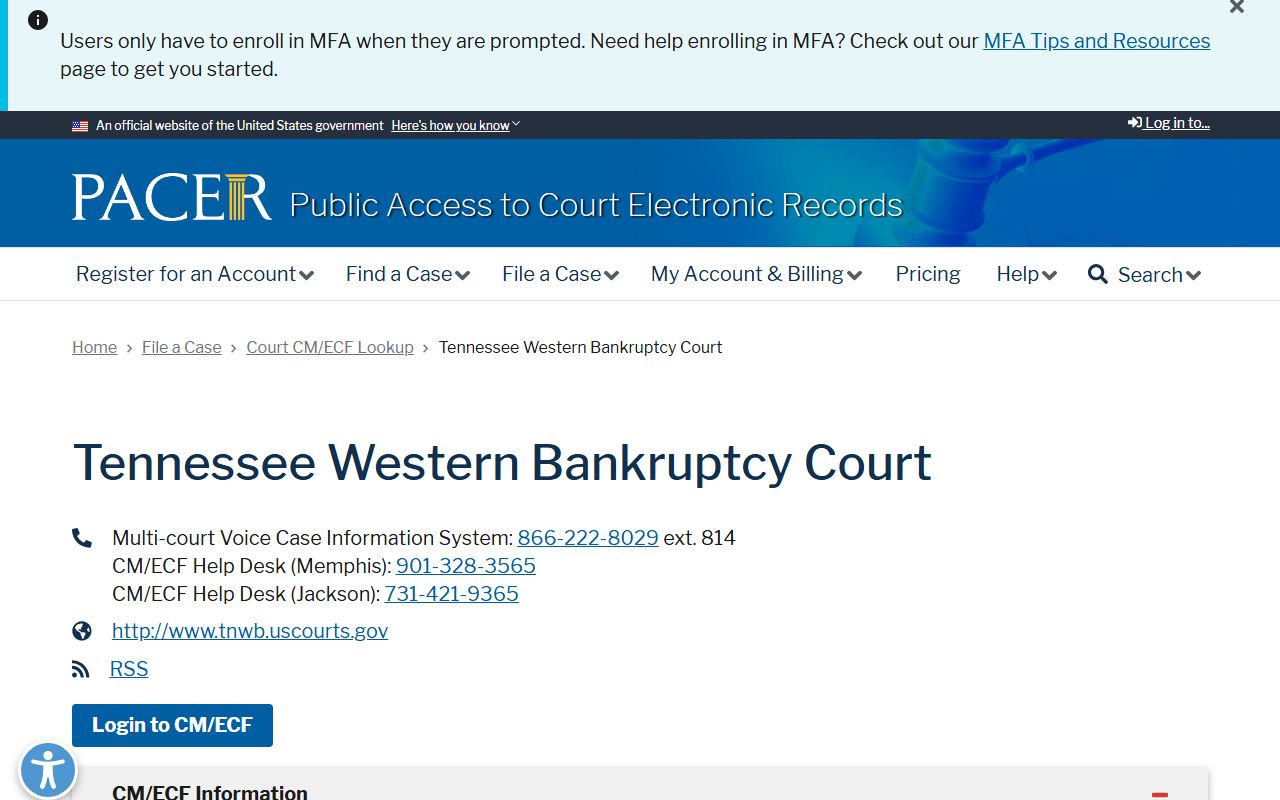
The Western District launched electronic filing on June 3, 2003, making it among the first Tennessee courts to go live with CM/ECF. Access its filing portal at the TNWBK portal on PACER. The Western District accepts PDFs up to 30 MB per document and 30 MB for merged documents.
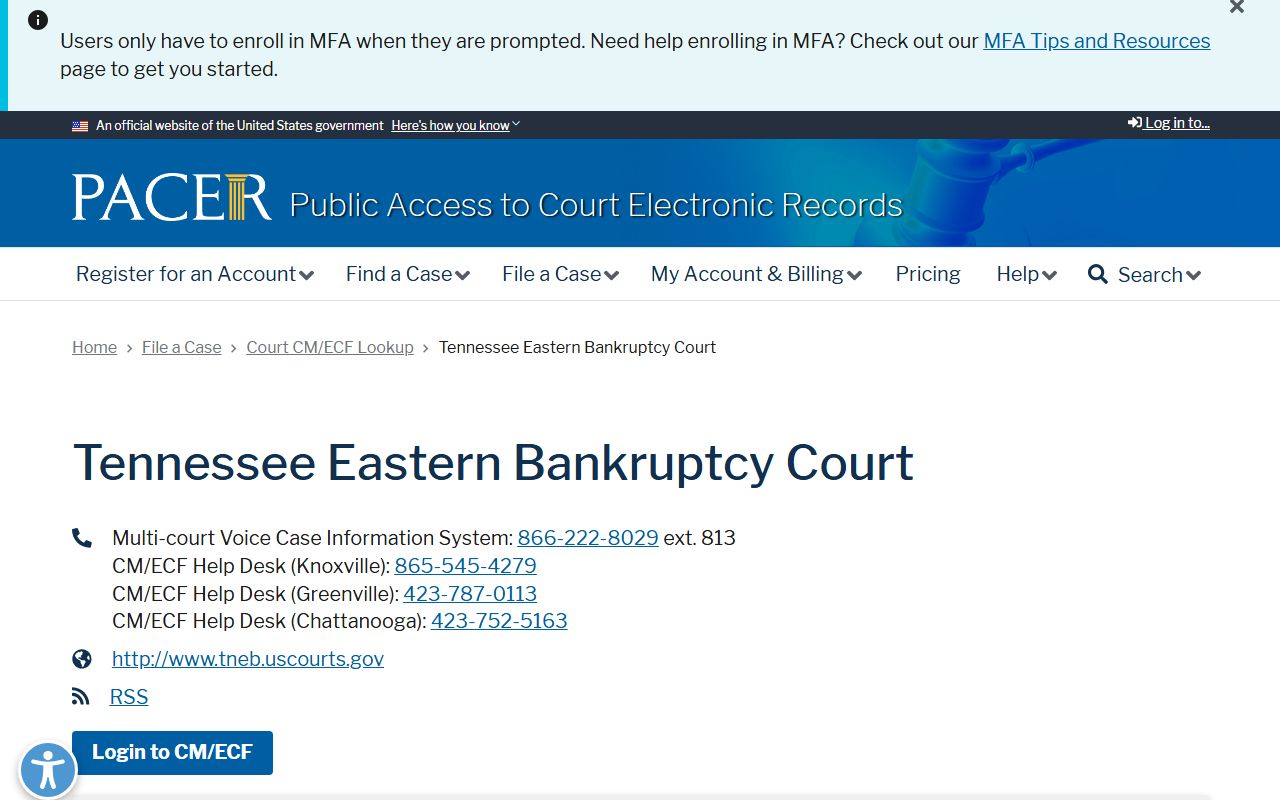
The Eastern District followed on May 17, 2005. Access the Eastern District filing portal at the TNEBK portal on PACER. The Eastern District accepts PDFs up to 35 MB and allows merged documents up to 500 MB, the largest limit of the three courts. All three districts now use NextGen CM/ECF and require multifactor authentication for attorney logins. Pro se filers in the Western and Middle districts can use the eSR (Electronic Self Representation) tool to submit documents without a full CM/ECF account. Debtor Electronic Bankruptcy Noticing (DeBN) is a free opt-in service across all three Tennessee districts that delivers court orders and notices by email instead of paper mail.
Public Access Under Tennessee and Federal Law
Federal bankruptcy records are governed by federal law, not state law. The main statute is 11 U.S.C. § 107, which makes case papers and court dockets open to public examination without charge. This applies to all three Tennessee bankruptcy districts.
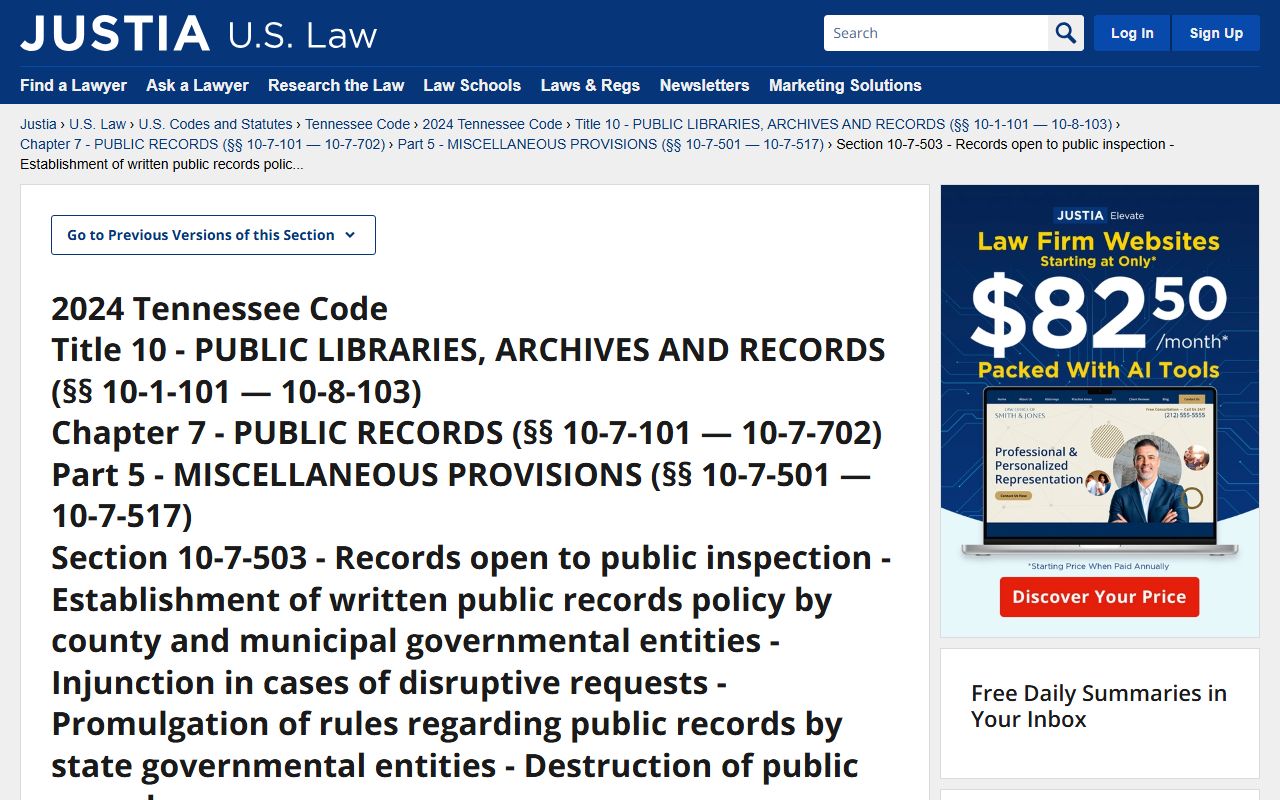
Tennessee's state court records fall under a separate state law. Under T.C.A. § 10-7-503, all state, county, and municipal records are open for personal inspection by any Tennessee citizen during business hours. The records custodian must respond to any request within 7 business days. The custodian must either provide the record, deny the request in writing with the legal basis for denial, or give a reasonable time estimate for production. Failure to respond within 7 business days constitutes a denial and gives the requester the right to bring a legal action. This statute covers circuit court judgments, general sessions court records, and other state court files that may run alongside a federal bankruptcy case. A government entity cannot avoid disclosure by contracting with a private party to hold the records.
Tennessee has also opted out of the federal bankruptcy exemptions under T.C.A. § 26-2-112. This means Tennessee filers must use state exemptions, including the homestead exemption under T.C.A. § 26-2-301, rather than the federal exemption schedule. This fact appears in case records and affects the schedules debtors file with the court.
Browse Tennessee Bankruptcy Records by Location
By County
Each of Tennessee's 95 counties falls under one of the three federal bankruptcy districts. Select a county below to find the specific district court, courthouse address, and local resources for bankruptcy records in that area.
View All 95 Tennessee Counties →
By City
Find bankruptcy record resources for major Tennessee cities. Each city page shows the federal district, the courthouse address, and what to expect when searching records for that area.