
Search Sullivan County Bankruptcy Records
Sullivan County bankruptcy cases are filed with the U.S. Bankruptcy Court for the Eastern District of Tennessee, Northeastern Division, with the primary courthouse in Greeneville. This page explains how to search case records, what documents are in a typical file, and how to reach the court clerk for copies or in-person help.
Sullivan County Bankruptcy Quick Facts
Eastern District Court, Northeastern Division
Sullivan County falls under the Northeastern Division of the U.S. Bankruptcy Court for the Eastern District of Tennessee. The serving courthouse for this division is located at 220 W. Depot Street, Suite 218, Greeneville, TN 37743. The clerk's office can be reached at (423) 787-0113. Hours are typically Monday through Friday, 8 a.m. to 4 p.m., though it is a good idea to call ahead before making the trip.
The Greeneville courthouse handles bankruptcy filings for Sullivan County along with several other northeast Tennessee counties. This is the place to go if you need certified copies, want to file documents in person, or have questions that require speaking with a clerk. The staff can help with case status questions, fee information, and directing you to the right form for your situation.
The Eastern District's court website at tneb.uscourts.gov has local rules, filing forms, judge procedures, and trustee information. If you plan to file without an attorney, the court's self-help resources are a useful starting point. The site also lists electronic filing procedures for attorneys using CM/ECF.
Sullivan County is one of the more populous counties in the Northeastern Division. Cases from the county's two major cities, Kingsport and Bristol, are filed here as well. If you are looking for records tied to a business or person in either city, the Greeneville courthouse holds those records.
Searching Sullivan County Cases Online
PACER is the standard tool for searching federal bankruptcy records. Register at pacer.uscourts.gov for a free account. After logging in, select the Eastern District of Tennessee and search by name, Social Security number (last four digits), or case number. Access costs 10 cents per page. Individual documents are capped at $3. If your total quarterly bill is $30 or less, there is no charge for that quarter.
The PACER Case Locator at pcl.uscourts.gov is a good starting point if you are not sure which district filed a case. It searches across all federal courts at once. Enter the debtor name, pick Tennessee as the state, and see which district and case number come up. The locator shows basic case data and links to the full PACER record.
For phone-based lookups, the Voice Case Information System is free. Call 866-222-8029 and press extension 813 for the Eastern District. The automated system is available around the clock. You can get case numbers, filing dates, hearing schedules, and trustee assignments by entering a name or case number on your phone keypad. VCIS does not provide document access, but it confirms basic case details at no cost.
Sullivan County Government and Local Records
The Sullivan County government website provides general county information and links to local offices. It is a useful starting point for finding contact information for county clerks, courts, and other local government services that may intersect with bankruptcy research.
The Sullivan County official site at sullivancountytn.gov covers county departments and services.
State circuit and general sessions court records for Sullivan County are separate from federal bankruptcy filings. State court records can be relevant when researching civil judgments, liens, or garnishments tied to the same person or business involved in a bankruptcy case.
The PACER system at the Eastern District gives access to all active and closed federal bankruptcy cases for Sullivan County. The federal records include petitions, schedules, creditor lists, and court orders.
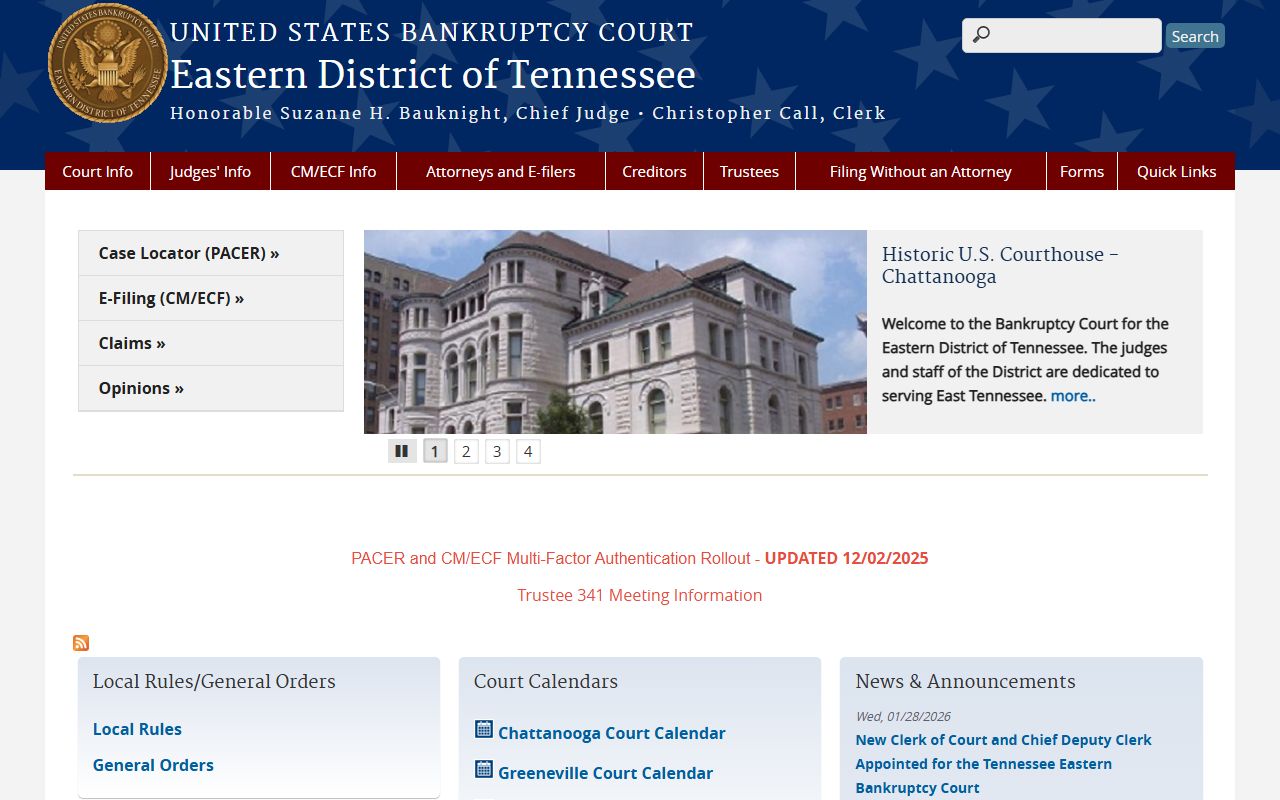
Searching PACER for Sullivan County cases is straightforward once you have an account. You can filter results by case chapter, filing date, and open or closed status to narrow down what you need.
What Is in a Sullivan County Bankruptcy File
Each bankruptcy case file holds a set of core documents. The petition starts the case and lists basic debtor information. The schedules detail all assets, all debts, income, expenses, and contracts. The creditor matrix is a list of everyone owed money. The statement of financial affairs covers financial activity in the two years before filing. All these documents are part of the public record and available through PACER.
Chapter 7 cases also include the trustee's no-asset or asset report, any trustee objections, and the discharge order when the case closes. Chapter 13 files add the proposed repayment plan, the confirmation order, and payment records for the three-to-five-year plan period. Chapter 11 cases, most common for businesses, include a disclosure statement and a reorganization plan that creditors vote on.
Some information is redacted. Social Security numbers appear in truncated form, showing only the last four digits. Bank account numbers are similarly masked. A judge may seal specific records if warranted by circumstances such as minor involvement or trade secret protection. The clerk can advise on which records are accessible when you visit or call.
The National Archives holds closed cases that have been transferred from the court's active system. For older Sullivan County cases, check archives.gov/research/court-records for the request process.
Filing Fees, Chapters, and Key Procedures
Federal bankruptcy filing fees are the same across all Tennessee districts. Chapter 7 costs $338. Chapter 13 is $313. Chapter 11 runs $1,717. Fees are paid at filing. Chapter 7 filers below 150 percent of the federal poverty line may request a full fee waiver. Any filer can request an installment plan by filing a motion with the court before or at the time of filing.
Chapter 7 is the most common filing type for individuals. It results in a discharge of most unsecured debts after the trustee reviews assets. Most individual Chapter 7 cases in Sullivan County are no-asset cases, meaning the trustee finds nothing to sell. The process usually takes three to five months from filing to discharge. Chapter 13 is a reorganization for people with steady income who want to keep property, such as a home facing foreclosure. The plan runs three to five years and requires court approval.
Once a case is filed, the automatic stay goes into effect. Creditors must stop collection efforts, wage garnishments, foreclosures, and most lawsuits. Violations of the stay can result in sanctions against the creditor. The stay remains in place until the case closes, is dismissed, or a creditor successfully seeks relief from the court.
PACER document access is 10 cents per page. Certified copies from the courthouse cost more and require a direct request to the clerk. Call the Greeneville office at (423) 787-0113 for current copy fees and turnaround times.
Public Records Access and Governing Law
Access to federal bankruptcy records is governed by 11 U.S.C. Section 107. This statute establishes that all papers filed in a bankruptcy case are public records unless a specific exception applies. Exceptions cover sealed documents, personal identifiers, trade secrets in business reorganization cases, and records restricted by court order. The statute gives courts authority to protect sensitive information while keeping most case records open to the public.
Tennessee's public records statute, TCA 10-7-503, governs state and county government records. This law applies when you request documents from the Sullivan County clerk's office, a state court, or a county agency. It does not govern federal bankruptcy court records. The two systems are separate, and different rules apply depending on whether the record is state or federal.
In practice, most Sullivan County bankruptcy records are accessible through PACER with an account and a small per-page fee. Very old records may require a NARA request. The Greeneville courthouse can help direct you to the right source for any case you are researching.
Cities in Sullivan County
Sullivan County includes two qualifying cities with their own records pages.
Nearby Counties
Sullivan County borders several other northeast Tennessee counties, each with its own bankruptcy records page.