
Williamson County Bankruptcy Records
Williamson County bankruptcy cases are handled by the U.S. Bankruptcy Court for the Middle District of Tennessee, with filings processed through the Nashville courthouse roughly 20 miles north of the county seat of Franklin. All petitions filed by Williamson County residents are federal public records and can be searched through PACER. The county is one of the wealthiest in Tennessee, but bankruptcy filings still occur and all are part of the open federal docket.
Williamson County Bankruptcy Quick Facts
Middle District Court and Nashville Courthouse
Williamson County falls under the U.S. Bankruptcy Court for the Middle District of Tennessee. The Nashville courthouse at 701 Broadway, Room 170, Nashville, TN 37203 handles cases for 36 central Tennessee counties, including Williamson. The clerk's office number is (615) 736-5584. Nashville is close enough that most Williamson County filers or their attorneys can reach the courthouse without much difficulty.
All three main chapter types are available. Chapter 7 liquidates non-exempt assets to pay off debts and typically concludes within a few months. Chapter 13 allows filers to keep assets and pay creditors over a three-to-five year plan. Chapter 11, used most often for businesses, carries a $1,717 filing fee and involves more complex proceedings. The chapter choice depends on income, assets, and the type of debt involved.
The court's full website is at https://www.tnmb.uscourts.gov. It has local rules for the Middle District, required forms, a filing fee schedule, and guidance for people who want to file without an attorney. The site is updated when rules or fees change, so it's worth checking before you file.
Williamson County Government Portal
The Williamson County government operates an official website covering all county departments and services. Bankruptcy itself is a federal matter, so the county has no role in managing those case files. However, the county site is a good starting point if you need to find the county clerk's contact information, verify the address of the Franklin courthouse, or look up general county records.
Williamson County's state court system handles civil cases, probate, and other local legal matters. Creditors who pursued collection lawsuits against debtors before a bankruptcy was filed may have records in the county's circuit or general sessions courts. Checking both the county's state records and the federal PACER system gives a complete picture of a debtor's legal and financial history.
The screenshot below shows the Williamson County Tennessee government portal.

Find office directories, courthouse contacts, and county services at https://www.williamsoncounty-tn.gov/. Make sure you are on the Tennessee county site and not a site for a different state, as there are Williamson counties in other states as well.
PACER Access for Williamson County Cases
PACER is the main tool for finding federal bankruptcy records. Create a free account at https://pacer.uscourts.gov and then search the Middle District of Tennessee court. A name search pulls up all matching cases, showing the chapter type, date filed, and current status.
Clicking a case takes you to the docket, which is a chronological list of every document filed. You can open the petition, the creditor schedules, any trustee reports, and court orders. Each page costs 10 cents, capped at $3.00 per document. Quarterly charges under $30 are waived. Most individual searches cost very little.
The screenshot below shows PACER, the federal case records system used to access Williamson County bankruptcy filings.
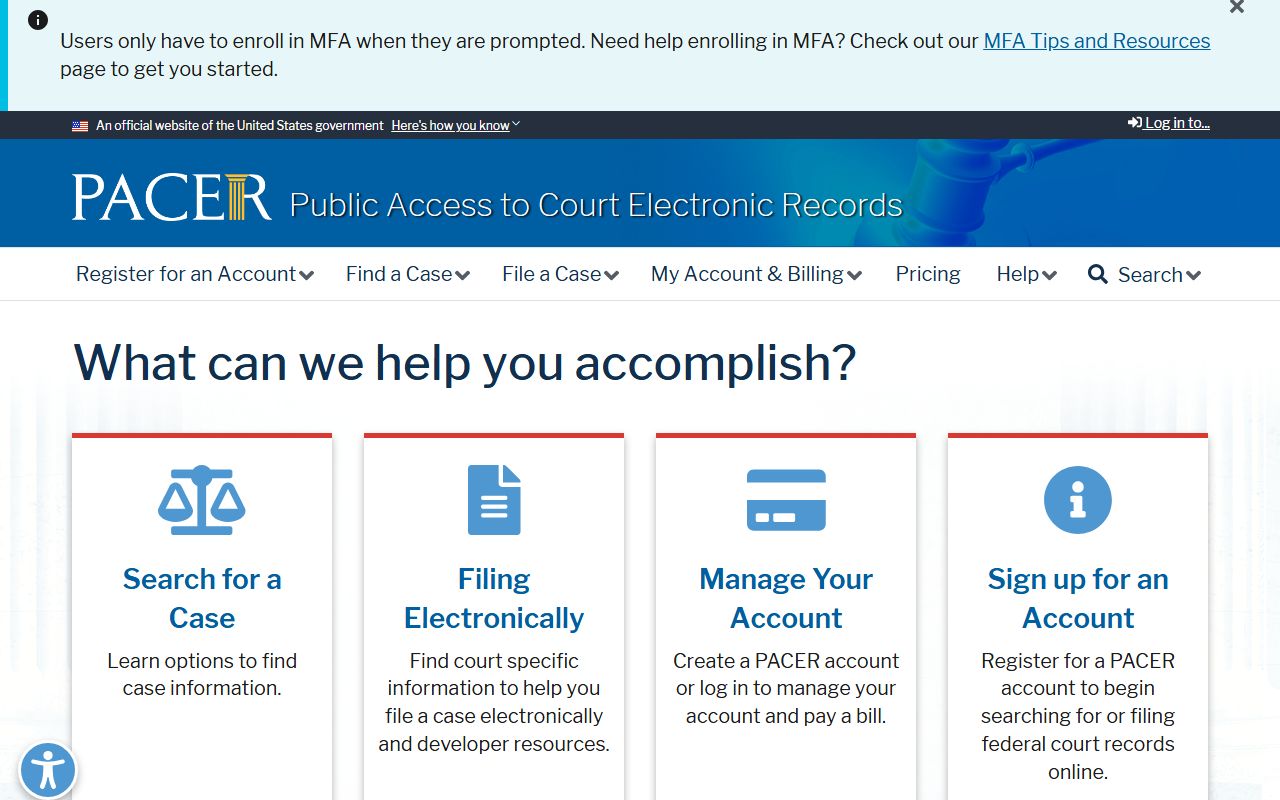
For a broader search across all federal courts, the PACER Case Locator at https://pcl.uscourts.gov searches every district at once. This is useful if you don't know which district handled a filing or if someone may have filed in more than one state.
What Bankruptcy Documents Show
The petition is the core document. It identifies the debtor by name and address, notes the chapter being filed, and includes a partially redacted Social Security Number. Supporting schedules list every asset and every debt. Schedule A/B covers real property and personal property. Schedules D through F list creditors broken down by debt type and amount owed. Creditor names appear in full.
Schedules I and J report monthly income from all sources and monthly household expenses. These two schedules are often key in determining whether someone qualifies for Chapter 7 or must instead use Chapter 13. The means test, which compares income to state median figures, is also part of the file in Chapter 7 cases.
The Statement of Financial Affairs is another required filing. It covers recent income, lawsuits and legal actions involving the debtor, property transfers in the past four years, and preferential payments to creditors in the period before filing. Researchers and creditors often focus on this document because it can reveal hidden assets or unusual transactions.
All of this is public under 11 U.S.C. Section 107. Courts can seal records only under strict, narrow exceptions. The full Social Security Number is routinely redacted, but all other content in a typical file is publicly accessible on PACER.
Middle District Bankruptcy Court Search Portal
The Middle District court's website includes its own case lookup tools in addition to PACER. Some basic docket information is available through the court's web interface without a PACER login. This can be useful for a quick check before committing to a full PACER search.
The screenshot below shows the Middle District of Tennessee Bankruptcy Court portal.
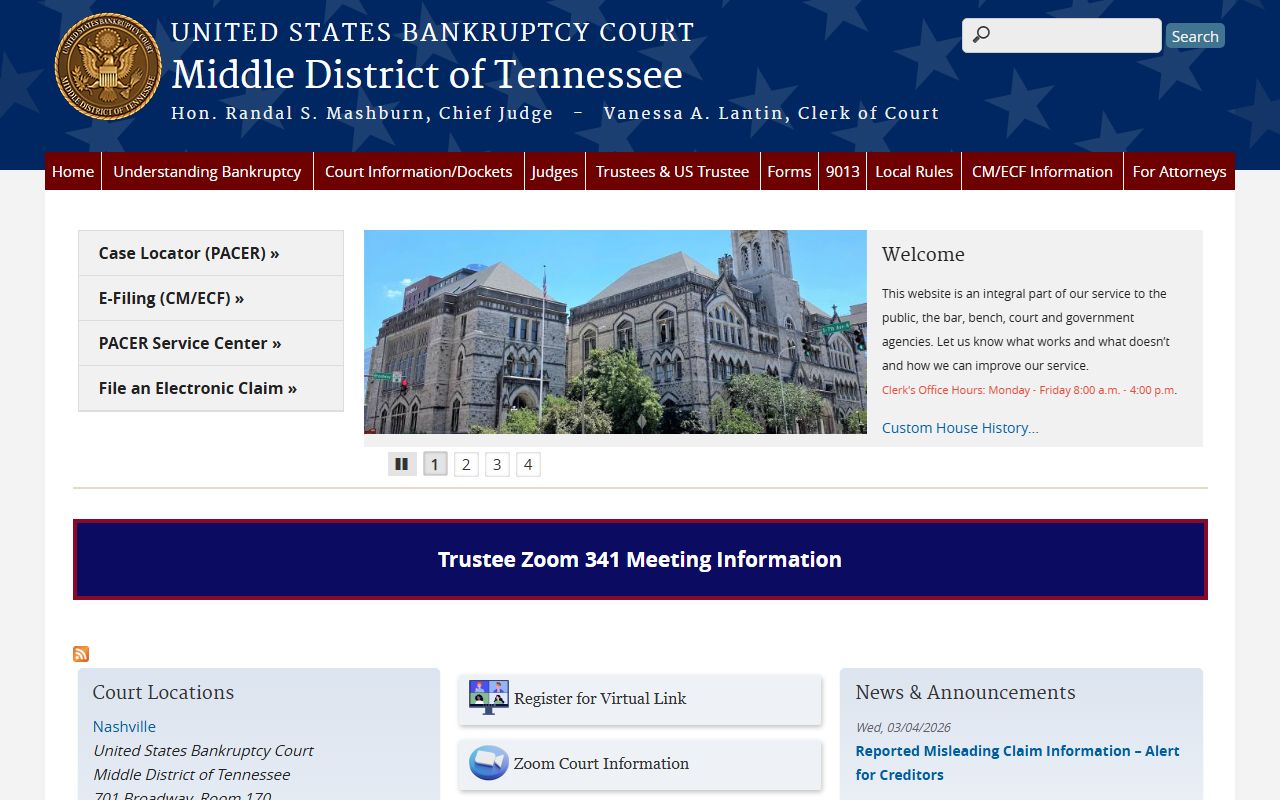
Visit https://www.tnmb.uscourts.gov to use the court's search tools and access local rules, filing guides, and court calendars. The site also has contact information for clerk's office staff if you have questions about a specific case.
VCIS Phone System for Case Status
The Voice Case Information System gives quick phone access to case status in the Middle District. Call 866-222-8029 and press extension 816. Provide the debtor's name when prompted, and the system reads back the case number, filing date, and whether the case is open or closed.
VCIS runs 24 hours a day and costs nothing to use. It doesn't let you view documents, but it can confirm whether a case exists and its current state. That's often all you need before deciding whether to search PACER in depth. It also works well if you're checking from a phone without easy internet access.
Filing Costs and Waivers
Federal filing fees in 2025 are $338 for Chapter 7, $313 for Chapter 13, and $1,717 for Chapter 11. These amounts apply in all three Tennessee districts. They cover court processing and are separate from any attorney fees the filer may pay.
Chapter 7 filers with income below 150 percent of the federal poverty level can apply for a fee waiver. The request must go in with the petition. If denied, the filer can ask to pay in up to four installments. Chapter 13 and Chapter 11 filers must pay the full fee and cannot apply for waivers, though installment payment may be allowed by court order.
Attorney costs in Williamson County vary. Some attorneys charge more here than in rural counties due to the local cost of living. However, competitive pricing still exists and it's worth getting a few quotes. Pro se filing is allowed, and the court's website provides self-help guides for unrepresented filers.
Cities in Williamson County
Williamson County includes several cities that meet the population threshold for their own pages on this site. Each city's residents file bankruptcy at the same Middle District courthouse in Nashville.
Nearby Counties
Williamson County borders several other Middle District counties, all of which file at the same Nashville courthouse.