
DeKalb County Bankruptcy Records
DeKalb County bankruptcy records are handled through the U.S. Bankruptcy Court for the Middle District of Tennessee, with all filings processed at the Nashville courthouse. This guide explains how to find case records, who to contact, and what documents are available to the public in DeKalb County.
DeKalb County Quick Facts
Middle District Court in Nashville
DeKalb County falls within the U.S. Bankruptcy Court for the Middle District of Tennessee. All bankruptcy petitions filed by DeKalb County residents or businesses are submitted to and managed by this district court. The Nashville courthouse is the single staffed location for the Middle District.
The courthouse address is 701 Broadway, Room 170, Nashville, TN 37203. The phone number is (615) 736-5584. Office hours run Monday through Friday, 8:00 a.m. to 4:00 p.m. You can also call the Voice Case Information System (VCIS) at 1-866-222-8029, extension 816, to get basic case status by phone at no cost.
The Middle District Bankruptcy Court website provides access to court information and public records.
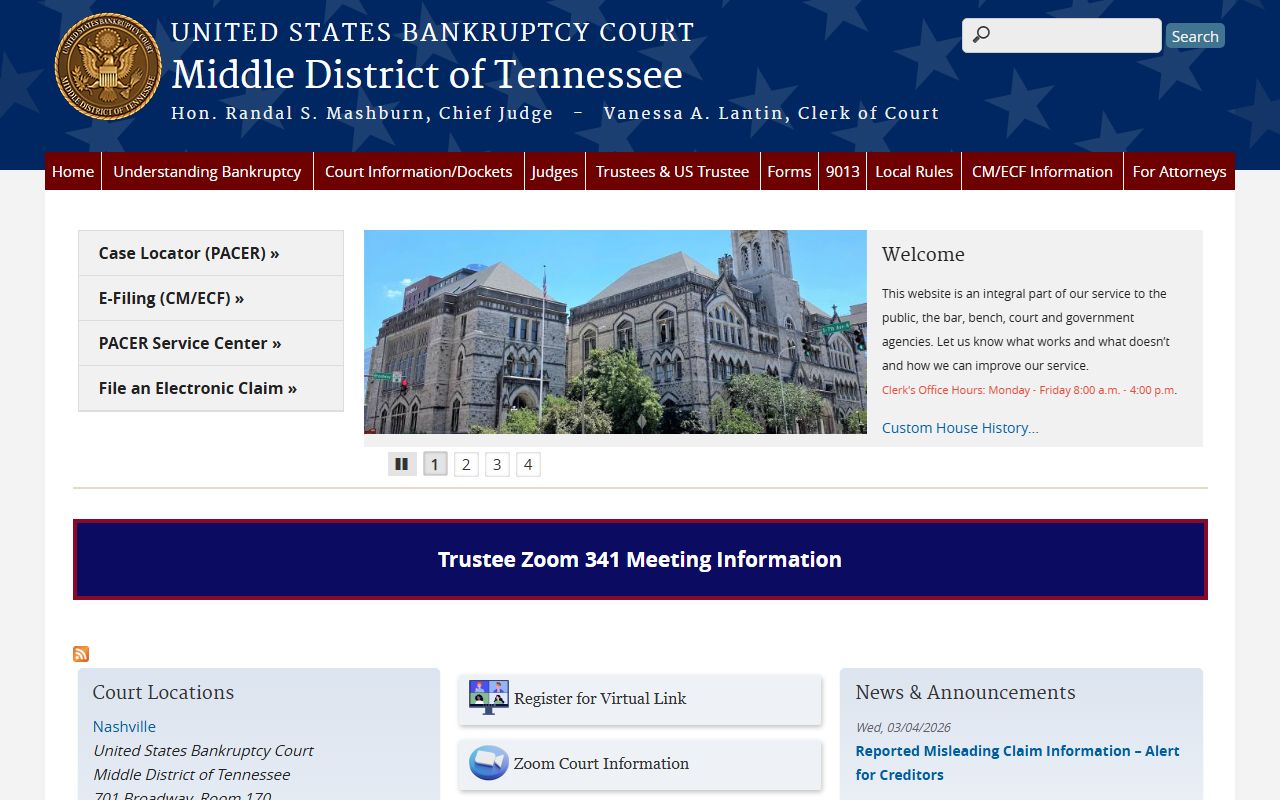
Residents can use the Middle District court portal to find docket information, case summaries, and filed documents related to DeKalb County bankruptcy cases.
If you want to visit in person, plan ahead. Nashville is roughly 80 miles from Smithville. Bring any case numbers or debtor names you want to look up. Staff can help you use the public access terminals at the courthouse.
Note: You do not need an attorney to search public records or view filed documents at the courthouse.
Search DeKalb Cases with PACER
PACER (Public Access to Court Electronic Records) is the main online tool for finding federal bankruptcy filings. DeKalb County cases appear in the Middle District's PACER database. You can search by debtor name, case number, Social Security number (last four digits), or employer ID.
PACER charges 10 cents per page to view documents, with a maximum charge of $3.00 per document. If your total quarterly charges are under $30, those fees are waived. That means many casual users pay nothing. You need to register for a PACER account before you can search. Registration is free.
The PACER federal court access system is the primary platform for searching bankruptcy filings online.
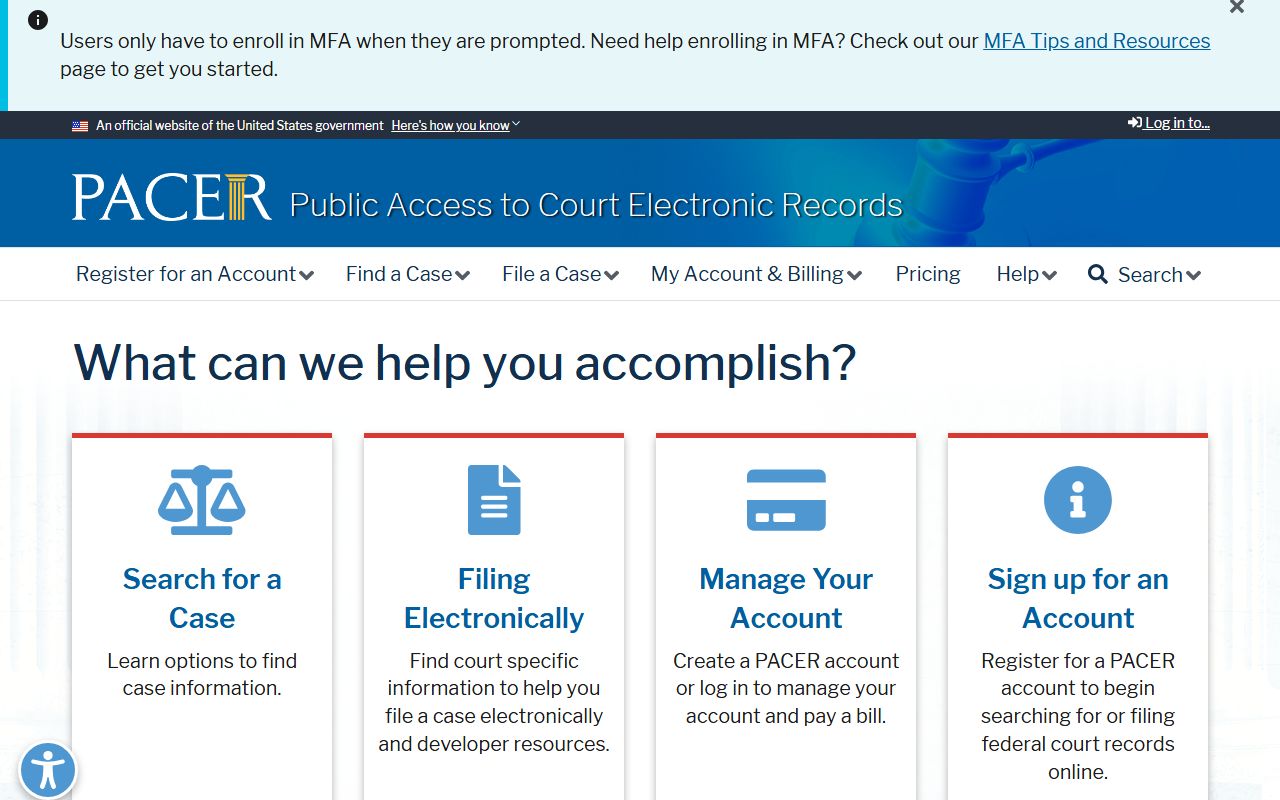
Once logged into PACER, select the Middle District of Tennessee to narrow your results to cases filed by DeKalb County residents and businesses.
You can also use the PACER Case Locator to search across all federal courts at once. This is useful if you are not sure which district a debtor filed in. Enter a name or case number and the tool returns results from every district in the country.
Note: PACER records go back several decades, but older paper records may only be available through the National Archives.
Types of Bankruptcy Filed in DeKalb County
Most individuals in DeKalb County file under Chapter 7 or Chapter 13. Chapter 7 is a liquidation bankruptcy. It clears most unsecured debts, like credit cards and medical bills. Chapter 13 lets you keep your property and pay debts back through a three-to-five-year plan. Farmers may file under Chapter 12. Businesses use Chapter 11 for reorganization.
Each type has its own filing fee. Chapter 7 currently costs $338 to file. Chapter 13 costs $313. Chapter 11 and Chapter 12 carry higher fees. The court may allow you to pay in installments if you cannot afford the full fee upfront. You can also apply to have the Chapter 7 fee waived if your income is below a certain level.
The chapter you file under affects what records are created and when the case closes. Chapter 7 cases often wrap up in four to six months. Chapter 13 cases stay open for the full repayment plan period, which can be three to five years. All of these cases produce public records you can search through PACER.
Note: Chapter 11 cases can be large and complex, with many motions and hearings over years.
What Bankruptcy Records Contain
A bankruptcy case file includes the petition, schedules, and statements filed by the debtor. The petition lists basic debtor information. Schedules detail assets, liabilities, income, and expenses. The statement of financial affairs covers recent financial transactions. These are public records under 11 U.S.C. Section 107.
Some information is sealed or redacted. Social Security numbers and certain personal data are not fully visible in public records. The court redacts these under privacy rules. You will see partial SSNs or truncated account numbers. Full financial data may require a formal request and a showing of need.
Docket sheets list every action in a case chronologically. They show when documents were filed, hearing dates, and judge assignments. You can view docket sheets through PACER without downloading every document. This is a good way to get a quick overview of a case's history.
Discharge orders and trustee reports are also part of the public record. Discharge orders confirm that a debtor's eligible debts were wiped out. These documents are often searched by creditors and others with a legitimate interest in a case.
Historical Records and NARA
Older DeKalb County bankruptcy cases that predate electronic filing are held at the National Archives. PACER typically covers cases filed from the early 1990s onward. For older records, contact the National Archives and Records Administration.
NARA holds closed federal court records, including older bankruptcy cases from the Middle District of Tennessee. You can submit a records request online or by mail. Fees may apply depending on the volume of records requested. Allow several weeks for processing.
The Tennessee state courts website does not manage federal bankruptcy records, but it is a useful resource for understanding the broader Tennessee court system and finding state-level civil case information that sometimes overlaps with bankruptcy matters.
Note: State court records and federal bankruptcy records are separate systems. A debt lawsuit in state court is not the same as a federal bankruptcy filing.
Nearby Counties
Several counties border DeKalb County in Tennessee. Bankruptcy cases follow federal district boundaries, so your filing county determines which courthouse handles your case.