
Find Houston County Bankruptcy Records
Houston County bankruptcy records are public federal court filings managed by the U.S. Bankruptcy Court for the Middle District of Tennessee. Cases from Erin and the rest of Houston County are docketed in Nashville. This page covers how to search those records, what the filings contain, and where to access supporting resources at the local and state level.
Houston County Bankruptcy Quick Facts
Houston County Local Government Portal
The Houston County government website gives residents access to local office information, including the county clerk and circuit court clerk in Erin. Bankruptcy cases are handled at the federal level, but local offices can help you locate state civil court records that sometimes relate to financial disputes, debt judgments, or property liens connected to a bankruptcy filing.
The Houston County government website is the starting point for finding county office contacts, office hours, and local courthouse information in Erin.

The county seat of Erin is a small community, and local offices there can often direct you quickly to the right resource. The Circuit Court Clerk's office in Erin maintains state court dockets for Houston County. Those records cover civil collection suits and judgment filings, which are sometimes part of the same debt story as a federal bankruptcy case.
State civil and federal bankruptcy records are entirely separate systems. You need to search both to get the full picture of someone's financial legal history in Houston County.
Middle District Bankruptcy Court in Nashville
Every Houston County bankruptcy petition is processed by the U.S. Bankruptcy Court for the Middle District of Tennessee. Nashville is the only staffed courthouse in this district. The address is 701 Broadway, Room 170, Nashville, TN 37203. Phone: (615) 736-5584. Hours are 8:00 a.m. to 4:00 p.m., Monday through Friday.
Erin is roughly 70 miles northwest of Nashville, so the drive is manageable. Attorneys who represent Houston County clients file electronically through the CM/ECF system. People filing without an attorney can bring paper petitions to the Nashville clerk's office during business hours. Staff at the window can accept documents and answer procedural questions but cannot give legal advice.
The Middle District of Tennessee Bankruptcy Court website lists all local rules, court forms, fee schedules, and how to register for CM/ECF or PACER access. Forms are free to download. You can also find the court's general orders and standing procedures on this site.
For a quick, free case status check by phone, call 1-866-222-8029 and press extension 816 for the Middle District. This is the Voice Case Information System, or VCIS. It is automated, runs all day and night, and gives you basic case details like filing date, chapter type, and discharge status without requiring a PACER account.
Searching Houston County Cases Through PACER
PACER is the federal system for searching and reading bankruptcy court records. You can register for a free account at pacer.uscourts.gov. There is no subscription fee. You pay 10 cents per page when you view or download documents. One document is capped at $3.00. If you spend less than $30 in a quarter, the charges are waived entirely.
After you log in, go to the Middle District of Tennessee case search. Enter the debtor's name or a case number. You will see a list of matching results with filing dates and case status. Click a case to see its full docket, which lists every document filed from petition to discharge or dismissal. You can download individual documents at the per-page rate.
The PACER Case Locator is a wider search tool that scans all federal districts at once. Use it if you are not sure whether a person filed in Tennessee or somewhere else. It returns basic case information and links directly into the local district's full docket in PACER.
Most PACER searches for Houston County cases land in the Middle District system. However, if someone moved to Houston County from another state and filed there previously, the Case Locator will help you find that older record without guessing the district.
What a Houston County Bankruptcy Record Includes
A full bankruptcy case file contains more information than most people expect. The petition identifies the debtor by name and address, and lists the chapter type. Attached schedules spell out every asset the debtor owns, every debt they owe, their income, and their monthly expenses. A matrix of creditors lists each entity owed money, with addresses for notification.
As the case progresses, the court docket adds documents. Creditors file proofs of claim to formally assert what they are owed. The trustee may file objections, motions, or reports. Hearings get scheduled, and orders get entered. In Chapter 13 cases, there is also a repayment plan document and any modifications filed along the way.
The final document in a completed case is a discharge order, which releases the debtor from personal liability on covered debts. If the case is dismissed without a discharge, a dismissal order is entered instead. Both documents are part of the public record.
Social Security numbers in court filings are truncated to the last four digits as a privacy measure. Some documents can be sealed by court order, though this is rare in routine cases. The general rule under 11 U.S.C. Section 107 is that bankruptcy filings are open to the public.
Filing Fees and Bankruptcy Chapter Options
Chapter 7 costs $338 to file in Houston County. This chapter liquidates non-exempt assets to pay creditors and discharges most unsecured debts. It is the fastest option, usually wrapping up in three to four months. To qualify, the filer must pass a means test based on household income compared to the Tennessee state median.
Chapter 13 carries a $313 filing fee. It lets filers keep their property while repaying debts over three to five years through a court-approved plan. It is a good choice for someone who is behind on mortgage payments and wants to catch up without losing their home. Completion requires steady income throughout the repayment period.
Chapter 11 is used mainly by businesses. The filing fee is $1,717. It allows the debtor to continue operating while reorganizing debts under a plan confirmed by the court. Individuals with very high debt levels can also use Chapter 11 when Chapter 13 limits are exceeded.
Courts can allow Chapter 7 fees to be paid in installments for low-income filers. A full fee waiver is also available in Chapter 7 if the filer's income is below 150% of the federal poverty level. These options are applied for at the time of filing.
Tennessee Public Records Law and Federal Case Access
Bankruptcy records are governed by federal law. The main statute is 11 U.S.C. Section 107, which establishes that papers filed in a bankruptcy case are public records. Access may be restricted only when a court issues a specific sealing order, and such orders require a finding of good cause.
For state court records in Houston County, the relevant law is Tennessee Code Annotated Section 10-7-503. This is the Tennessee public records statute. It gives any citizen the right to inspect and copy public records unless an exemption applies. Court records kept by state clerks fall under this law.
The Tennessee Administrative Office of the Courts oversees state court operations and can help clarify which state records are available and how to access them. For older or archived federal records, contact the National Archives, which holds retired federal court files from Tennessee districts.
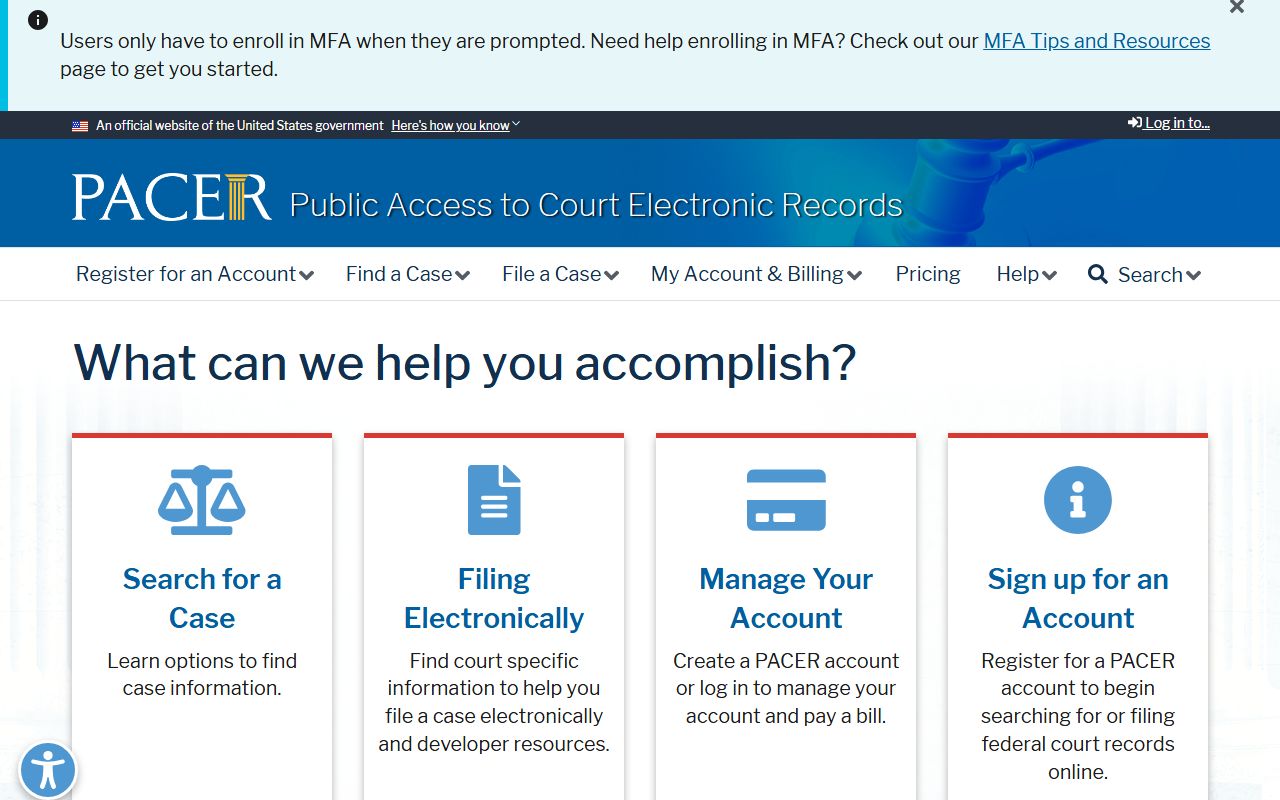
PACER is updated in near real time as documents are filed. For cases outside PACER's retention window, the National Archives is the next step for obtaining older bankruptcy files from Houston County and the rest of the Middle District.
Nearby Counties
Houston County neighbors several Middle Tennessee counties, all under the same federal bankruptcy court in Nashville.