
Search Dickson County Bankruptcy Records
Dickson County bankruptcy records are part of the Middle District of Tennessee federal court system, with all filings handled in Nashville. This page explains how to search for Dickson County cases online and in person, what records are public, and where to get help if you need it.
Dickson County Quick Facts
Dickson County Court Portal
The Dickson County government website provides local administrative information and links to county offices. While bankruptcy is handled federally, the county site is a useful starting point for understanding local resources and finding contact information for the Circuit Court Clerk.
The Dickson County government website provides access to local court and government information for residents and businesses.
Residents can use this site to locate county offices, find Circuit Court Clerk contact details, and learn about local public records in Dickson County.
For state-level civil case lookups, you can also check the Tennessee Court Information portal, which covers state circuit and general sessions court filings across Dickson County.
The Dickson County court records portal offers a way to search state-level civil and criminal case information filed in Dickson County courts.
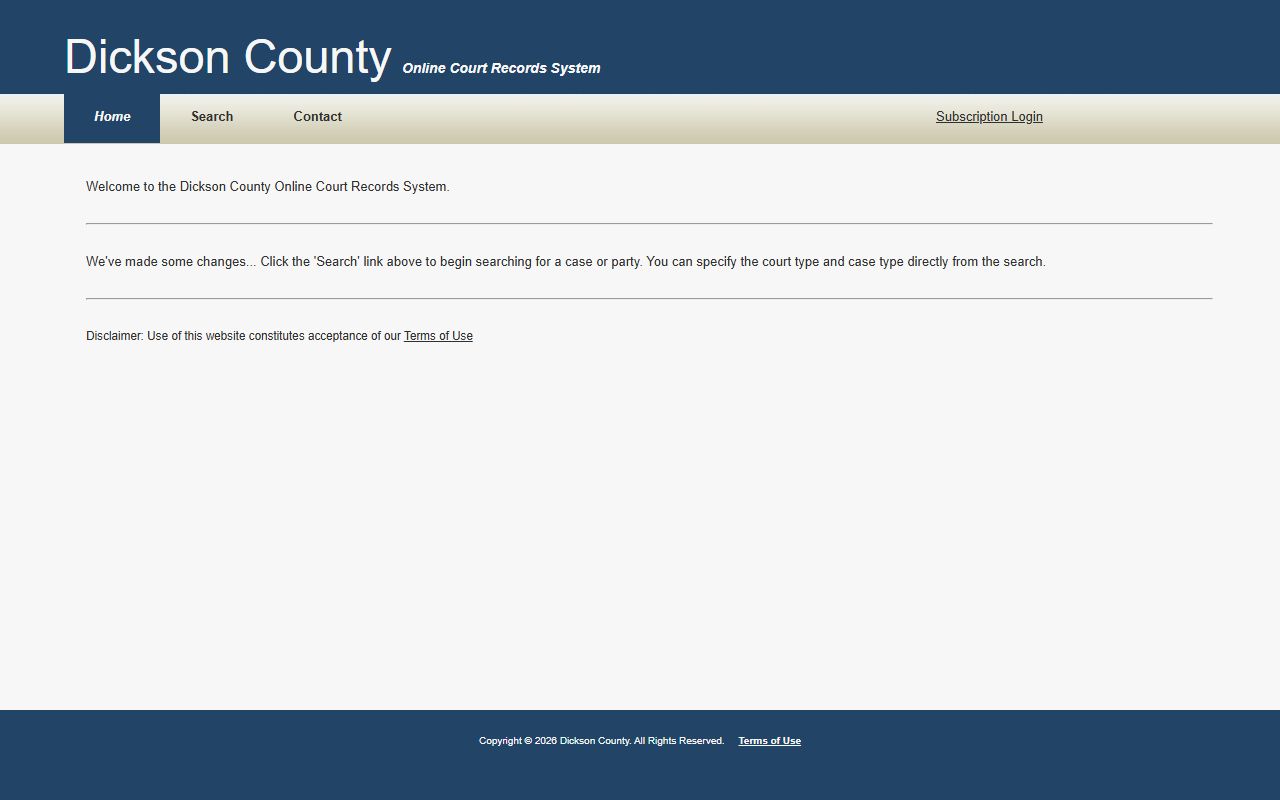
This tool can help you confirm whether a debt-related lawsuit was filed at the state level, which sometimes accompanies or precedes a federal bankruptcy filing in Dickson County.
Note: State court records and federal bankruptcy filings are maintained by separate systems and must be searched independently.
Federal Bankruptcy Court Serving Dickson
All federal bankruptcy cases from Dickson County go through the U.S. Bankruptcy Court for the Middle District of Tennessee. The Nashville courthouse is the sole staffed location for this district. It handles Chapter 7, 11, 12, and 13 cases filed by Dickson County individuals and businesses.
The courthouse is at 701 Broadway, Room 170, Nashville, TN 37203. You can reach the court by phone at (615) 736-5584. Hours are 8:00 a.m. to 4:00 p.m., Monday through Friday. The court is closed on federal holidays. Dickson is about 40 miles west of Nashville, so a trip to the courthouse is manageable.
The Middle District of Tennessee Bankruptcy Court has its full docket available online for registered PACER users.
You can get basic case status over the phone at no charge through the Voice Case Information System at 1-866-222-8029, extension 816. This system reads case data automatically and works outside business hours. Have a case number or debtor name ready before you call.
Note: Phone searches through VCIS are limited in detail but useful for quick status checks without logging into PACER.
PACER and Online Case Access
PACER is the federal system for viewing court filings online. To search Dickson County bankruptcy records, log into PACER and select the Middle District of Tennessee. You can search by debtor name, case number, or other identifiers. Results include docket entries, filed documents, and case status.
The PACER online access system lets registered users search and download federal court filings including bankruptcy petitions, schedules, and discharge orders.
PACER charges 10 cents per page. Each document has a $3.00 cap. If your total charges in a quarter are under $30, you owe nothing. Registration is free. You only pay when you download documents. Viewing docket sheets costs money too, but most docket pages are short.
The PACER Case Locator lets you search across all federal districts at once. If you are unsure which district a debtor used, this tool is the best place to start. Enter a name and it scans every U.S. bankruptcy court database.
Bankruptcy Chapters Available in Dickson County
Dickson County residents and businesses can file under several bankruptcy chapters. Each chapter serves a different purpose and produces a different type of case record.
Chapter 7 is the most common. It is a liquidation process that eliminates most unsecured debts in four to six months. The filing fee is $338. Many people with limited income qualify. Chapter 13 is a repayment plan lasting three to five years. The filing fee is $313. It lets you catch up on mortgage arrears or other secured debts you want to keep.
Chapter 11 is used by businesses and higher-income individuals who need to reorganize debts. Chapter 12 is for family farmers and fishermen. These cases are less common in Dickson County but still filed through the same Nashville courthouse. All chapter types produce public case records accessible through PACER.
The type of chapter affects how long records stay active in the PACER system. Closed cases remain searchable but are no longer updated. Older closed cases may have limited document availability through PACER and could require a NARA request for full records.
Note: Dismissed cases are also part of the public record and may appear in searches even though no discharge was granted.
What Is in a Bankruptcy File
Each bankruptcy case includes a set of core documents. The petition starts the case. Schedules A through J detail the debtor's assets, debts, income, and expenses. The Statement of Financial Affairs covers recent financial history. These are public documents under 11 U.S.C. Section 107.
Some personal data is redacted. You won't see full Social Security numbers or full account numbers. Courts follow strict privacy rules when posting documents online. A creditor matrix, which lists all creditors, is another common document. It may be restricted under local court rules.
The docket sheet lists every event in chronological order. It shows filing dates, hearing notices, trustee appointments, and orders entered by the judge. You can view the docket without opening individual documents. This helps you assess a case quickly before deciding which documents to download.
Discharge orders are final documents confirming a debtor's debts were eliminated. These are among the most frequently searched documents, often by creditors or those doing background financial research.
Nearby Counties
Several counties border Dickson County in Tennessee. Bankruptcy cases follow federal district boundaries, so your filing county determines which courthouse handles your case.