
Jackson County Bankruptcy Filings
Jackson County, Tennessee bankruptcy records are public federal filings processed by the U.S. Bankruptcy Court for the Middle District of Tennessee. This is Jackson County, with its seat in Gainesboro -- not the city of Jackson in Madison County. All bankruptcy petitions from this county go through the Nashville courthouse. This page covers how to search those records, what information they contain, and where to find related resources at the state and local level.
Jackson County Bankruptcy Quick Facts
Federal Bankruptcy Court for Jackson County
The U.S. Bankruptcy Court for the Middle District of Tennessee handles all bankruptcy petitions from Jackson County. Nashville is the main staffed location. The courthouse address is 701 Broadway, Room 170, Nashville, TN 37203. Phone: (615) 736-5584. Office hours are 8:00 a.m. to 4:00 p.m., Monday through Friday, closed on federal holidays.
Gainesboro is in the Upper Cumberland region of Tennessee, about 90 miles northeast of Nashville. The drive is manageable, though longer than for counties closer to the capital. The Middle District's Cookeville area is occasionally referenced as a local point of contact, but Nashville is the staffed clerk's office where filings, hearings, and in-person records access all take place.
The Middle District of Tennessee Bankruptcy Court website contains local rules, forms, filing instructions, and fee schedules. All case documents filed by attorneys are submitted electronically through the court's CM/ECF system. Pro se filers can submit paper petitions to the Nashville clerk's office. Staff can receive documents and answer procedural questions but are not able to give legal advice.
A free phone-based case check is available through the Voice Case Information System. Call 1-866-222-8029 and select extension 816 for the Middle District. This automated line operates 24 hours a day and gives basic case details -- filing date, chapter type, and discharge status -- without a PACER account or any fees.
PACER Search for Jackson County Bankruptcy Cases
PACER is the federal government's public system for searching and viewing court records, including bankruptcy cases from Jackson County. Register for a free account at pacer.uscourts.gov. The registration process is online and takes only a few minutes.
After logging in, navigate to the Middle District of Tennessee case search. You can look up cases by debtor name, case number, or Social Security number. Results list the chapter, filing date, and case status. Clicking on a case opens the full docket with every document from petition to close. Documents cost 10 cents per page to view, capped at $3.00 per file. Quarterly charges below $30 are waived automatically.
The PACER Case Locator searches all federal districts at once. This is useful when you are not certain which district a person filed in, or when you want to check whether someone has filings in multiple states. It returns basic case data and links to the full docket in whichever district holds the case.
For most Jackson County searches, results will be in the Middle District. The Case Locator is most helpful for out-of-state prior filings or cases from before the person lived in Tennessee.
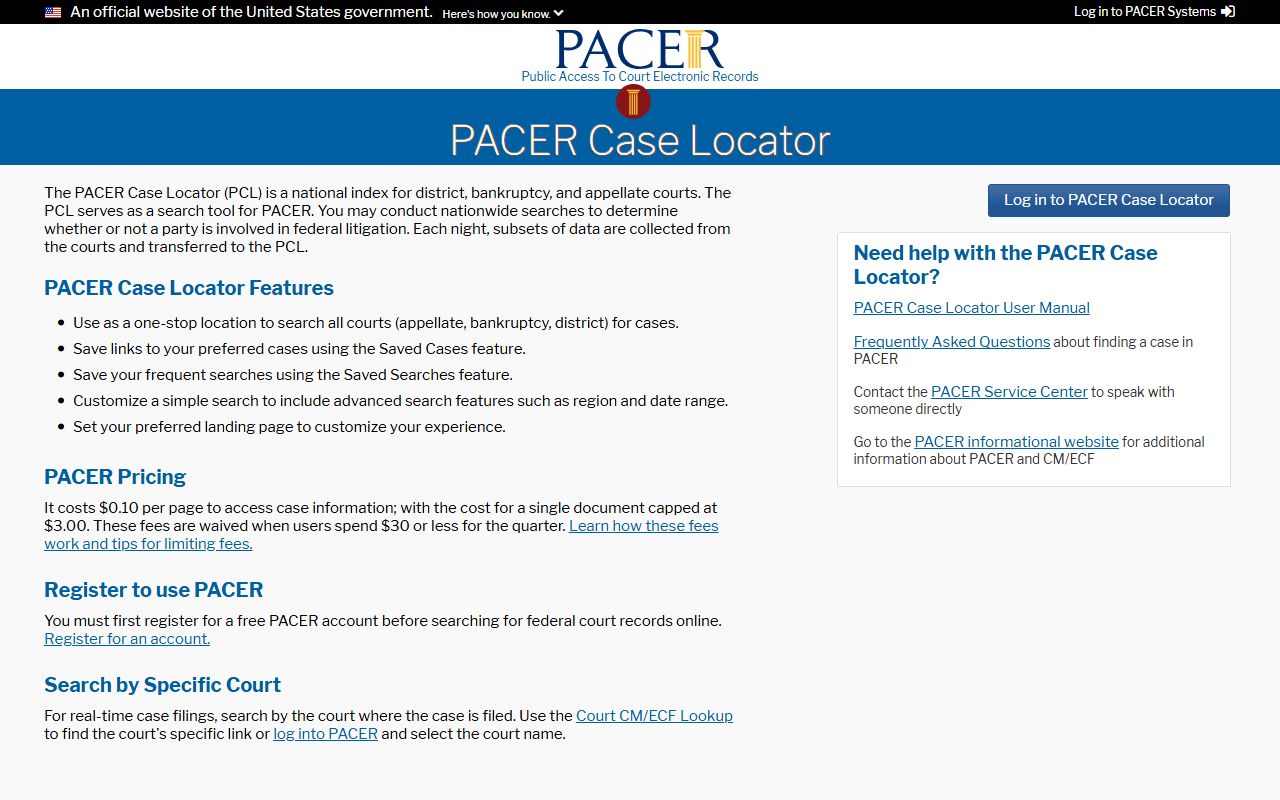
The PACER Case Locator is free to search at a basic level. You need a full PACER account to access the complete docket documents within the Middle District system.
What Jackson County Bankruptcy Files Contain
A bankruptcy petition is the first document in the file. It names the debtor, gives their address, and specifies the chapter. Attached schedules break the case down further: Schedule A/B lists real and personal property, Schedule C covers exemptions the debtor is claiming, Schedule D through F lists secured and unsecured creditors and the amounts owed, Schedule I shows income, and Schedule J shows monthly expenses.
Beyond the petition, the docket grows as the case moves. Creditors file proofs of claim to formally assert their amounts. The trustee reviews the file and may file objections or reports. Court hearings are noticed on the docket. For Chapter 13 cases, the proposed repayment plan is filed early and any later changes are docketed as plan amendments.
The 341 meeting of creditors is a required step in every bankruptcy case. It appears on the docket as a scheduled event, and the trustee's report from that meeting is filed afterward. Most routine consumer cases conclude with a discharge order, which is the document that formally ends the debtor's liability on qualifying debts.
Privacy rules apply to certain data in public filings. Under 11 U.S.C. Section 107, bankruptcy records are open to the public. Social Security numbers are truncated in all public documents. Courts can seal specific items, but this is uncommon in standard consumer cases.
Tennessee State Court Records in Jackson County
State civil court records in Jackson County are maintained by the Circuit Court Clerk's office in Gainesboro. These include debt collection lawsuits, civil judgments, and liens filed at the state level. While federal bankruptcy records are in PACER, state civil records require a separate search through Tennessee's state court systems.
The Tennessee Administrative Office of the Courts provides information on how state court records are organized and how to access them. The Tennessee Court Information portal offers online lookups for many county-level state court dockets.
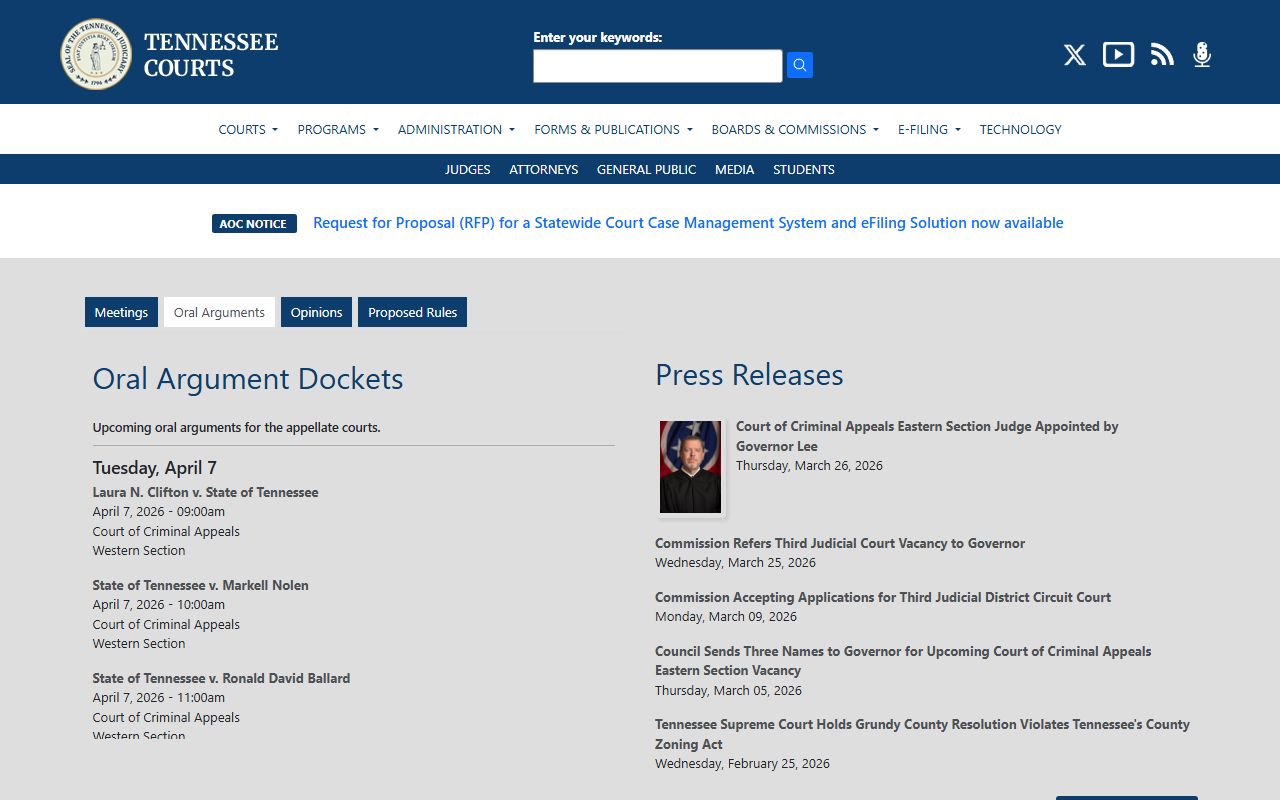
State records are relevant when researching someone's financial legal history because creditors often file suit at the state level before a federal bankruptcy case is filed. A judgment lien from state court may still appear in a bankruptcy case as a secured claim. Knowing both the state and federal records gives a fuller picture of the situation.
Access to state public records in Tennessee is governed by Tennessee Code Annotated Section 10-7-503. This law gives any person the right to inspect public records held by government agencies, including court clerks in Jackson County.
Filing Fees and Chapter Types
Chapter 7 carries a $338 filing fee. It is the most common type of consumer bankruptcy. Most unsecured debts are discharged within three to four months after filing. The filer must qualify through a means test based on household income relative to the Tennessee state median.
Chapter 13 costs $313 to file. It uses a three-to-five year plan to repay some or all of the debts while the filer keeps their property. Homeowners who are behind on mortgage payments often choose Chapter 13 because it lets them catch up over time and avoid foreclosure while the case is active.
Chapter 11 is primarily for businesses. Its filing fee is $1,717. Individuals with debts too large for Chapter 13 may also use it. The process is longer and more involved than the consumer chapters.
Low-income filers can request to pay the Chapter 7 fee in installments. A full fee waiver is available if household income is below 150% of the federal poverty line. Both options are requested by filing the appropriate form with the petition.
Archived and Historical Records
Older Jackson County bankruptcy cases that have been retired from PACER are held by the National Archives. The Southeast Region NARA facility in Atlanta stores retired federal court files from Tennessee. The NARA court records page explains how to request these files, what information to include in the request, and what fees apply for paper copies.
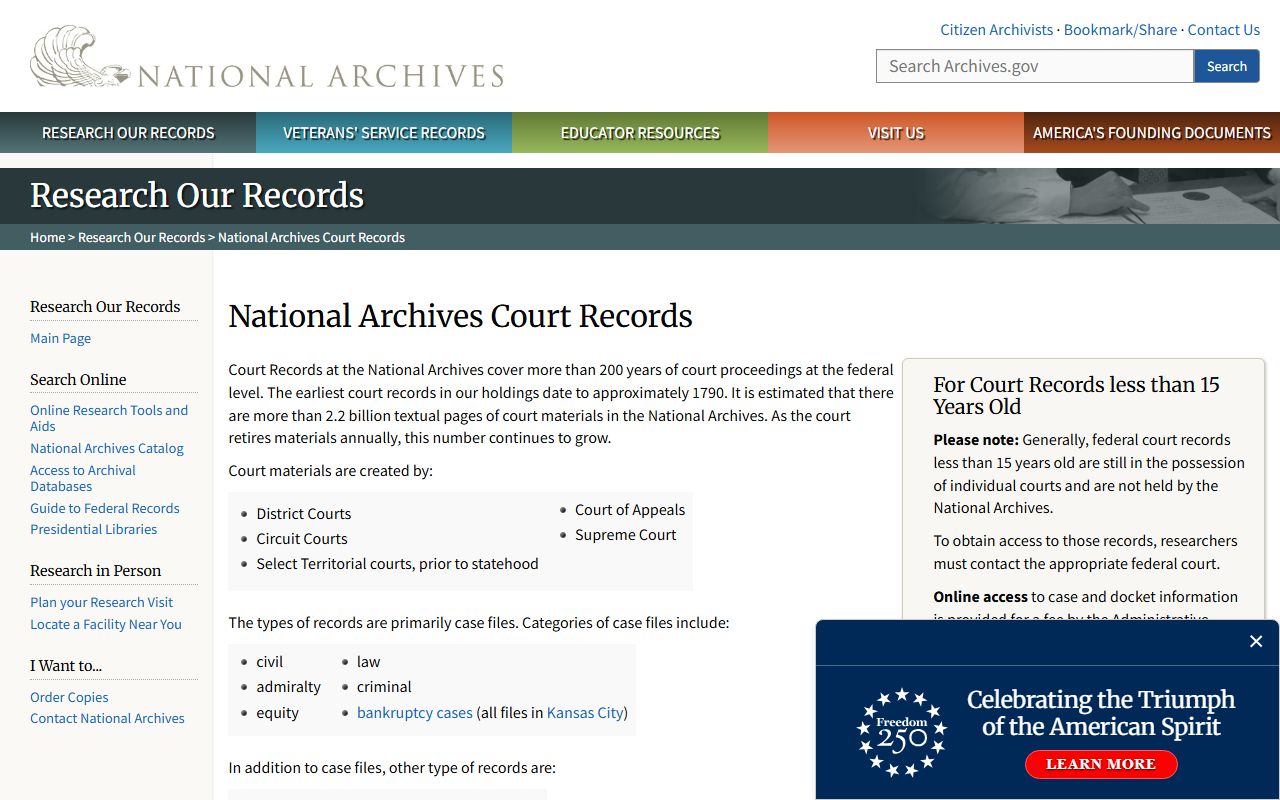
Cases from before the electronic filing era -- which began in Tennessee federal courts in the early 2000s -- exist only as paper documents at NARA. More recent closed cases may still be in PACER's system, depending on how long ago the case closed and whether it has been archived. If a PACER search returns no results for a case you believe was filed, contact the Middle District clerk's office to ask whether it has been transferred to NARA.
NARA requests take several weeks to process. Rush options are limited. If you need a certified copy of an older judgment or discharge order, allow time for the request to be fulfilled and plan accordingly.
Nearby Counties
Jackson County is in the Upper Cumberland region of Tennessee and borders several counties also served by the Middle District federal court.