
Moore County Bankruptcy Docket Search
Moore County bankruptcy records are filed with the U.S. Bankruptcy Court for the Middle District of Tennessee and processed through the Nashville courthouse. Moore County is one of Tennessee's smallest counties, but residents and businesses here file under the same federal system as everyone else in the Middle District.
Moore County Bankruptcy Quick Facts
Federal Bankruptcy Court for Moore County
Moore County sits in the Middle District of Tennessee. All bankruptcy cases from Lynchburg and the rest of Moore County are handled at the Nashville courthouse. The address is 701 Broadway, Room 170, Nashville, TN 37203. The clerk's phone number is (615) 736-5584. Office hours run Monday through Friday from 8:00 a.m. to 4:00 p.m. The court closes for all federal holidays.
Nashville is roughly 80 to 90 miles from Lynchburg. That is a longer drive compared to some other Middle District counties. For routine matters, though, most tasks can be handled without any trip to Nashville. PACER lets you file documents, search records, and download case files entirely online. Hearings and trustee meetings sometimes require in-person attendance, but otherwise the process is remote-friendly.
The Middle District of Tennessee Bankruptcy Court website lists local rules, forms, approved credit counseling agencies, and the filing fee schedule. You can also find contact information for standing trustees who handle Chapter 7 and Chapter 13 cases in this district.
Moore County's circuit court clerk in Lynchburg handles state-level cases. That office is completely separate from the federal bankruptcy court. Do not contact the county clerk to request bankruptcy records. All federal filings are only available through PACER or the Nashville courthouse.
How to Search Records Using PACER
PACER is the federal judiciary's online access system. It covers every federal court in the country, including the Middle District of Tennessee. To find Moore County bankruptcy records, register at pacer.gov, log in, and choose the Middle District of Tennessee from the court list. Search by name, case number, or Social Security last four digits.
The PACER federal court portal gives you access to docket sheets, petitions, schedules, trustee reports, and court orders for all Middle District of Tennessee bankruptcy cases, including those filed by Moore County residents.
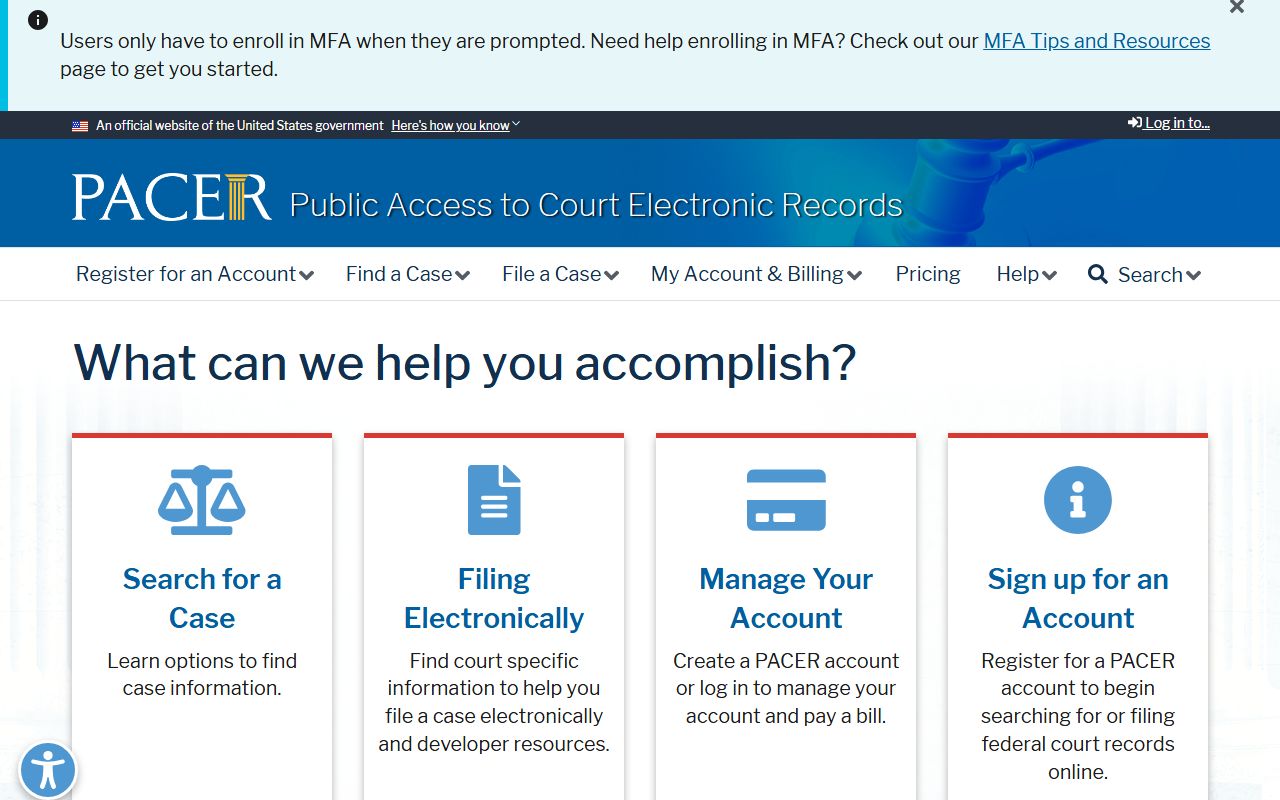
PACER costs 10 cents per page. Each document is capped at $3.00. If your total fees for the quarter are under $30, you owe nothing. This cap makes it easy to do a few searches without spending much. Registration is free. Most casual searches cost very little or nothing at all.
The PACER Case Locator is a separate tool that searches all federal districts at once. Use it when you are not sure whether a debtor filed in Tennessee or in another state. It scans every U.S. bankruptcy court and returns a match list with district information included.
The PACER Case Locator is the best tool for cross-district searches. It uses the same account as the standard PACER system and covers all chapter types across every federal district.
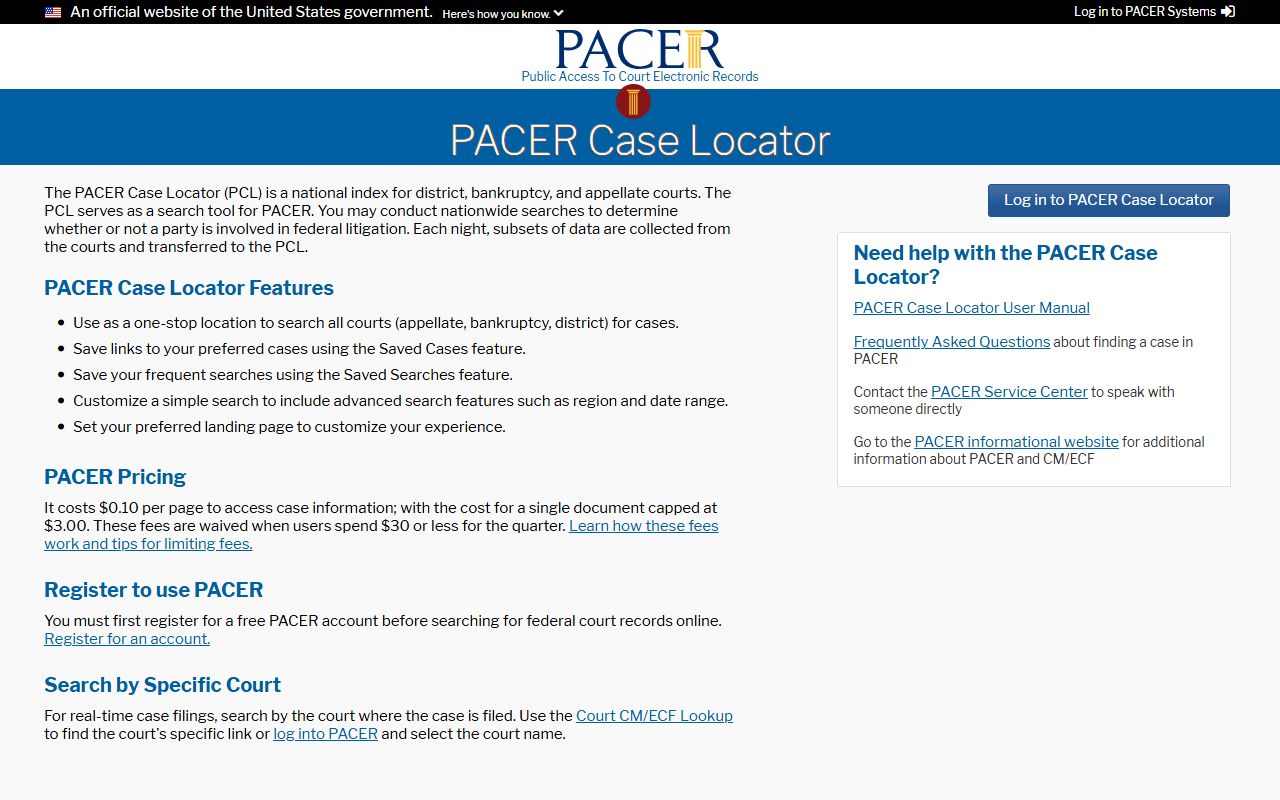
Both tools are maintained by the federal judiciary. They draw from the same underlying case data. For most Moore County searches, the court-specific PACER search will work fine. The Case Locator adds value when you need to cast a wider net.
Free Phone Lookup Through VCIS
The Voice Case Information System offers a free way to check case status by phone. No account is needed. The system runs all day, every day. Call 1-866-222-8029 and press extension 816 for the Middle District of Tennessee.
Enter a case number or a debtor name when prompted. The system reads back case type, filing date, hearing schedule, and current status. It does not provide documents. But it tells you fast whether a case is open, closed, discharged, or dismissed without logging into any system. Good for quick checks at any hour.
VCIS is most useful when you just need to know the basic status of a Moore County case without digging into documents. The phone system is reliable and works outside business hours. For full document access, you still need PACER.
What Documents Are Public in Moore County Cases
Federal bankruptcy records are public by law. Under 11 U.S.C. Section 107, all papers filed in a bankruptcy case are open to the public unless a court order specifically restricts them. Judges rarely seal entire cases. Most documents in a typical Moore County consumer case are fully visible through PACER.
The standard case file starts with the petition, followed by the schedules. Schedule A lists real property. Schedule B covers personal property. Schedule C identifies exempt assets. Schedules D, E, and F list secured and unsecured creditors. Schedules I and J report income and expenses. The Statement of Financial Affairs covers recent financial transactions. All of these are public.
Later in the case, you will find trustee reports, creditor meeting minutes, objection filings, and court orders. The discharge order closes the case for most Chapter 7 filers. In a Chapter 13, you also get the repayment plan and plan confirmation orders. Each document shows up on the docket in date order.
Some data is automatically redacted. Courts mask full Social Security numbers and financial account numbers before posting documents. This is not a request you need to make. It happens automatically under federal court rules. The public document already has this data removed before anyone can view it.
Bankruptcy Options for Moore County Filers
Moore County individuals and businesses can file under Chapter 7, 13, 11, or 12. Chapter 7 is by far the most common. It wipes out most unsecured debts through a short liquidation process. Most cases close within four to six months of filing. The fee is $338. Qualifying depends on income and passing the means test.
Chapter 13 is the repayment chapter. Filers make monthly payments to a trustee for three to five years. The fee is $313. It is often used to save a home from foreclosure or to catch up on car payments. Debtors keep their property but must follow a strict plan.
Chapter 11 handles business reorganizations and complex individual filings. The fee is $1,717. It is rare in a small county like Moore but does occur. Chapter 12, designed for family farmers, may also see occasional use in rural Moore County where farming operations still exist. All chapters generate public case records available in PACER.
Tennessee Records Law and Federal Filings
Tennessee's open records statute at T.C.A. Section 10-7-503 covers state and local public records. It does not apply to federal court files. Bankruptcy records are federal records governed by federal law. If you want to access a bankruptcy case, you use PACER or contact the Nashville federal courthouse directly.
Moore County's local government records, like deed records at the Register's office or state court filings at the Circuit Court, fall under the Tennessee public records law. Those records are separate from federal bankruptcy filings. A debt lawsuit in Moore County General Sessions Court is a state court record. A bankruptcy petition in the Middle District is a federal court record. You need different systems to find each type.
For older closed cases that no longer appear in PACER, the National Archives may have the records. The NARA federal court records archive holds older bankruptcy files from courts across the country, including the Middle District of Tennessee.
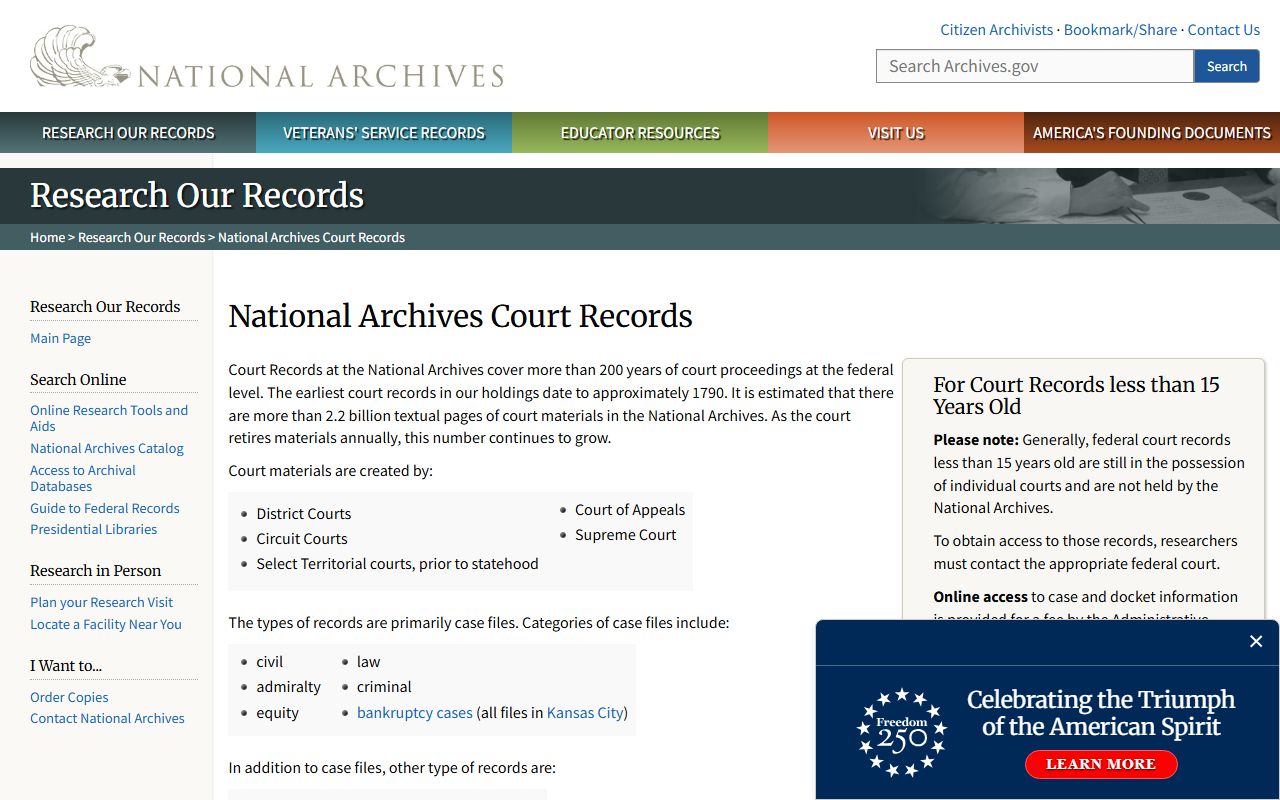
NARA requests may take weeks to process. They also carry fees for retrieval and copying. For any case filed within the past ten years, start with PACER. NARA is the fallback for records that are no longer active in the federal online system.
Nearby Counties
Moore County is surrounded by several Middle Tennessee counties, all of which file bankruptcy cases through the Nashville Middle District courthouse.