
Find Wilson County Bankruptcy Records
Bankruptcy cases filed by Wilson County residents go through the U.S. Bankruptcy Court for the Middle District of Tennessee, with the Nashville courthouse serving as the filing location. Wilson County's seat is Lebanon, and the county has seen steady population growth in recent years. All filed cases are federal public records accessible through PACER and related federal tools.
Wilson County Bankruptcy Quick Facts
Federal Court Serving Wilson County
Wilson County is part of the Middle District of Tennessee for federal court purposes. The U.S. Bankruptcy Court for the Middle District sits in Nashville at 701 Broadway, Room 170, Nashville, TN 37203. The clerk's office is at (615) 736-5584. Lebanon is close to Nashville, so Wilson County filers and their attorneys rarely face difficulty reaching the courthouse when an in-person appearance is needed.
The Middle District handles Chapter 7, Chapter 13, and Chapter 11 cases. Chapter 7 is the most common. It gives filers a fresh start by discharging most unsecured debts after a trustee reviews and, if needed, liquidates non-exempt assets. Chapter 13 lets filers repay some or all debts over three to five years while keeping their property. Chapter 11 is used mostly by businesses or individuals with very high debt levels and costs $1,717 to file.
Full court information, local rules, and filing guides are at https://www.tnmb.uscourts.gov. The court updates that site when fees, rules, or procedures change. It's a good first stop before any filing or formal contact with the clerk's office.
Wilson County Circuit Court Clerk
The Wilson County Circuit Court Clerk handles state-level court records including civil cases, probate matters, and general sessions filings. The clerk's office does not manage federal bankruptcy files, but it is an important resource when researching the financial history of Wilson County residents.
Before a debtor files for bankruptcy, creditors often pursue them in state court. Those civil lawsuits, default judgments, and liens can show up in Wilson County's state court records. Checking the circuit court records alongside PACER gives a broader view of a debtor's legal situation over time.
The screenshot below shows the Wilson County Circuit Court Clerk website.
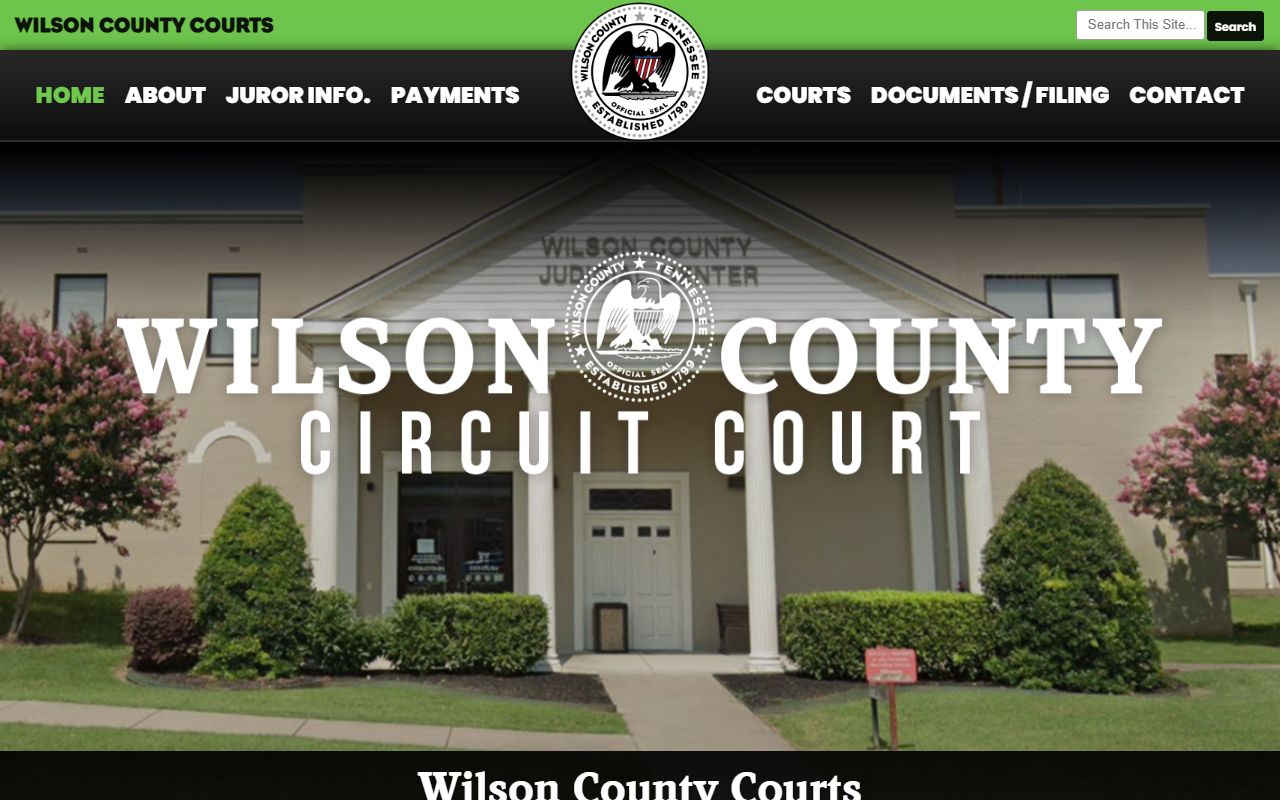
Access Wilson County circuit court clerk resources at https://wilsoncountycourts.com/. The site has contact information, courthouse hours, and links to court forms used in state proceedings.
Wilson County Government Portal
The Wilson County government's official site covers county departments, elected offices, and local public services. While federal bankruptcy files are not held at the county level, the government portal helps you find office addresses, phone numbers, and links to the relevant state court systems. If you're starting your research and aren't sure where to look, the county site can point you in the right direction.
Wilson County has grown quickly, and the government website reflects that with expanded online services. Tax records, property data, and general session case lookups are among the things you can sometimes find through county portals. Those types of state-level records can round out a financial background check when combined with federal bankruptcy data from PACER.
The screenshot below shows the Wilson County government portal.
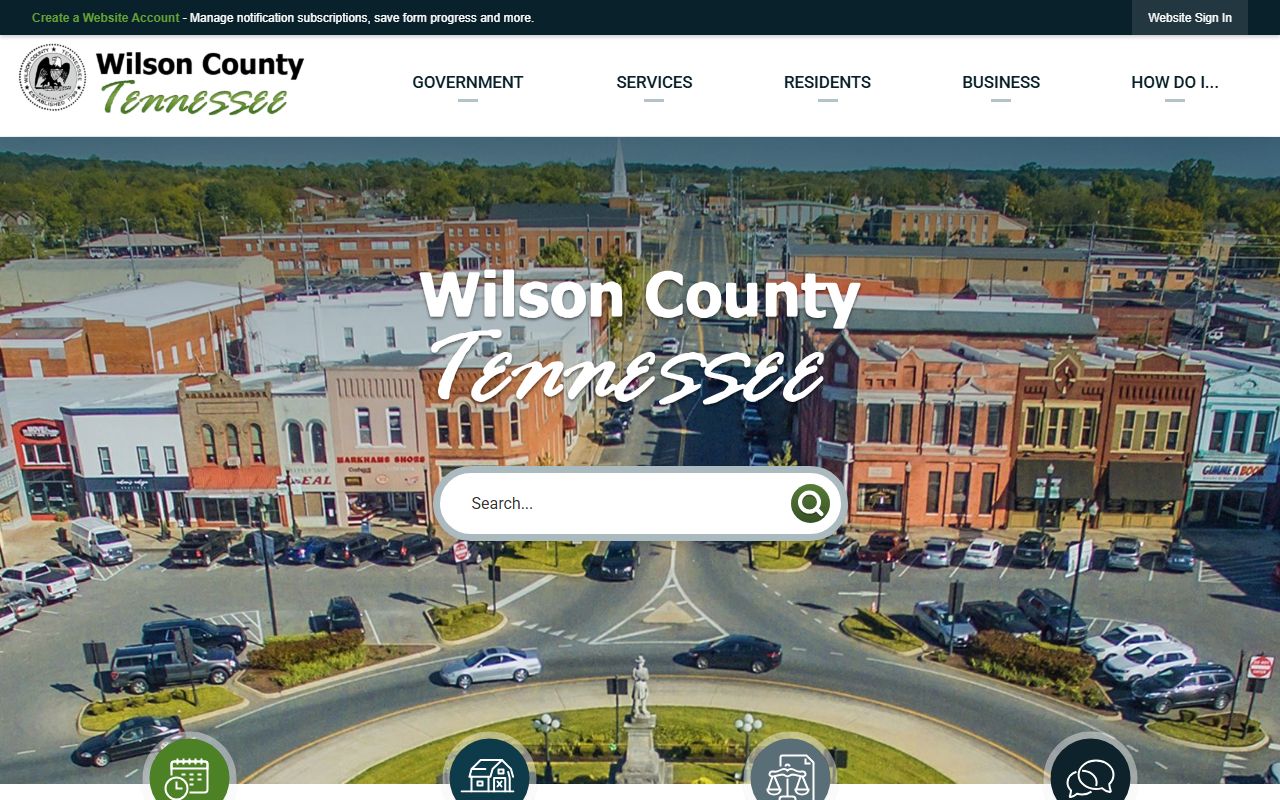
Visit https://www.wilsoncountytn.gov/ for county office contacts, service directories, and local government resources. Staff can help direct you to the right federal or state system for your specific records need.
Searching Records on PACER
PACER is the federal portal for court records. Register for a free account at https://pacer.uscourts.gov. Once logged in, select the U.S. Bankruptcy Court for the Middle District of Tennessee and run a party name search. Type the debtor's last name and first name. Results will list all matching cases with the chapter type, date filed, and current open or closed status.
From the case list, click on a specific case to see the docket sheet. The docket lists every filing in chronological order. You can open individual documents including the petition, the schedules of assets and debts, trustee reports, and any court orders. Each page costs 10 cents, and a single document is capped at $3.00. Quarterly charges under $30 are waived automatically.
The screenshot below shows PACER, the federal system used to search Wilson County bankruptcy records.
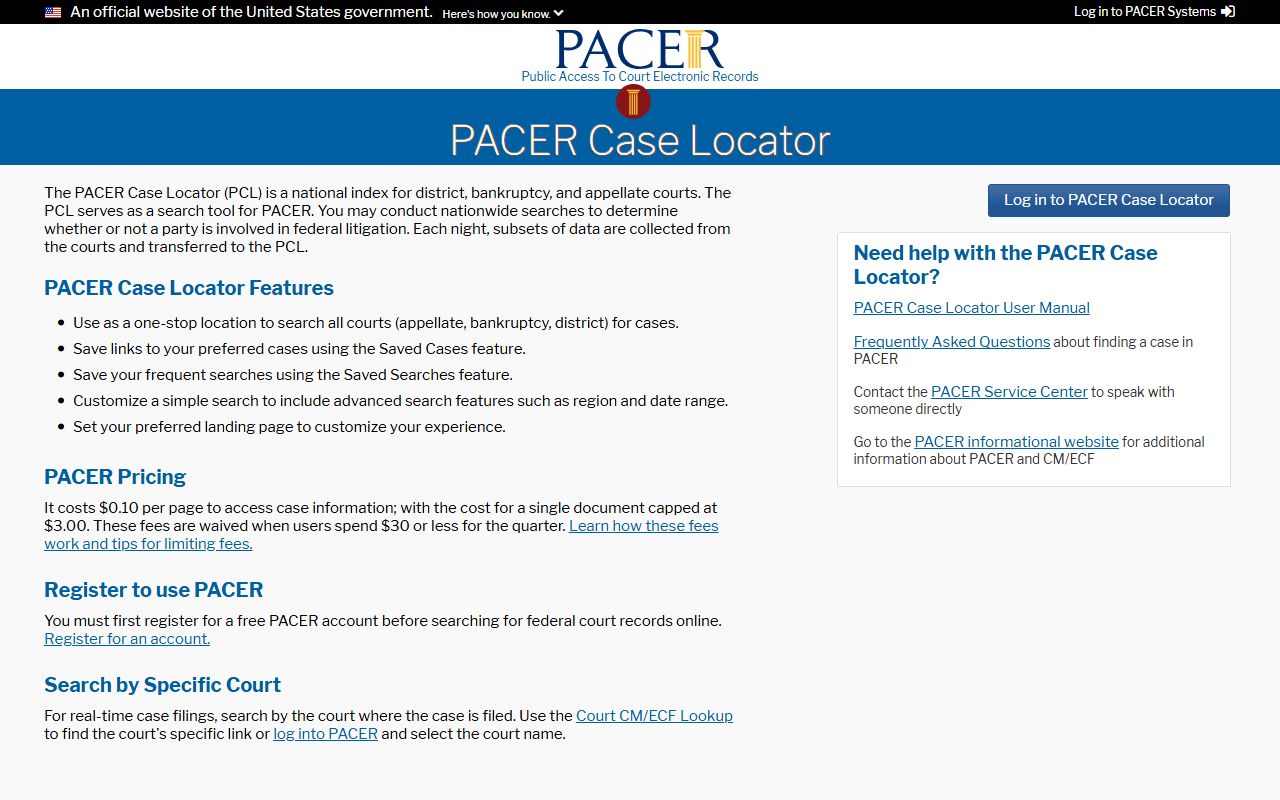
If you're not sure which district handled a case, the PACER Case Locator at https://pcl.uscourts.gov searches all federal courts at once. It's free and doesn't require any login. Results show which district filed the case, and you can then go into that court on PACER for the full file.
What Is in a Bankruptcy Record
Each bankruptcy file starts with a petition. The petition names the debtor, gives their address, states which chapter is being filed, and includes a partially redacted Social Security Number. The full number is kept off the public record, but everything else on the petition is open.
The schedules attached to the petition go into detail on every aspect of the debtor's finances. Schedule A/B lists real estate and personal property with estimated values. Schedules D, E, and F cover secured debts (like mortgages), priority debts (like taxes and child support owed), and unsecured debts (like credit cards and medical bills). Each creditor is listed by name with the amount owed.
Schedules I and J report monthly income and monthly expenses. These figures matter a lot in Chapter 7 cases because they feed into the means test, which determines whether someone qualifies for Chapter 7 or must file Chapter 13 instead. The Statement of Financial Affairs rounds out the filing with detail on income history, pending lawsuits, and recent financial transactions.
Federal law at 11 U.S.C. Section 107 makes bankruptcy records public. Courts can restrict narrow categories of sensitive information, but the standard file stays open. Anyone with a PACER account can view the full docket and documents.
At the end of a case, the court issues either a discharge order or a dismissal. A discharge wipes out eligible debts. A dismissal closes the case without giving the debtor any relief. Both outcomes appear on the public docket.
VCIS Automated Phone Lookup
The Voice Case Information System is a free phone service that provides basic case status for Middle District cases. Call 866-222-8029 and select extension 816 for the Middle District of Tennessee. Give the debtor's name when prompted and the system reads back case numbers, filing dates, and whether the case is open or closed.
VCIS runs every day and doesn't need a PACER login. It's a good first check when you want to confirm whether a case exists before you do a full PACER search. The system doesn't give document access, but status confirmation is often all you need to start.
Filing Costs and Waivers
Current federal filing fees are $338 for Chapter 7, $313 for Chapter 13, and $1,717 for Chapter 11. All three Tennessee districts charge the same amounts. Fees go directly to the court and do not include attorney costs.
Low-income Chapter 7 filers can apply for a fee waiver. The court looks at whether income falls below 150 percent of the federal poverty guideline. The waiver request form must be filed with the petition. If the waiver is denied, the filer can ask to pay in four installments. Chapter 13 and Chapter 11 filers cannot get waivers but may request an installment payment arrangement.
Attorneys charge separately for their services. Wilson County filers can choose among attorneys in Lebanon, Nashville, and surrounding areas. Some Chapter 7 cases are simple enough to handle pro se, meaning without an attorney. The Middle District's self-help resources on its website can help unrepresented filers understand the process.
Older Records Through NARA
Closed bankruptcy cases eventually leave PACER once they age past a certain point. Older files may be held by the National Archives and Records Administration. Visit the NARA court records page at https://www.archives.gov/research/court-records to request archived case files.
You'll need the debtor's name, the case number if available, and an approximate filing year. NARA has some older records in digital form. Others may require a formal written request. Fees apply for copies depending on document volume. Allow extra time for archived record requests, as processing can take several weeks.
Cities in Wilson County
Wilson County includes several cities with populations large enough to have their own pages on this site. All Wilson County city residents file bankruptcy at the same Nashville courthouse.
Nearby Counties
Wilson County borders a ring of Middle District counties, all of which use the Nashville courthouse for federal bankruptcy filings.